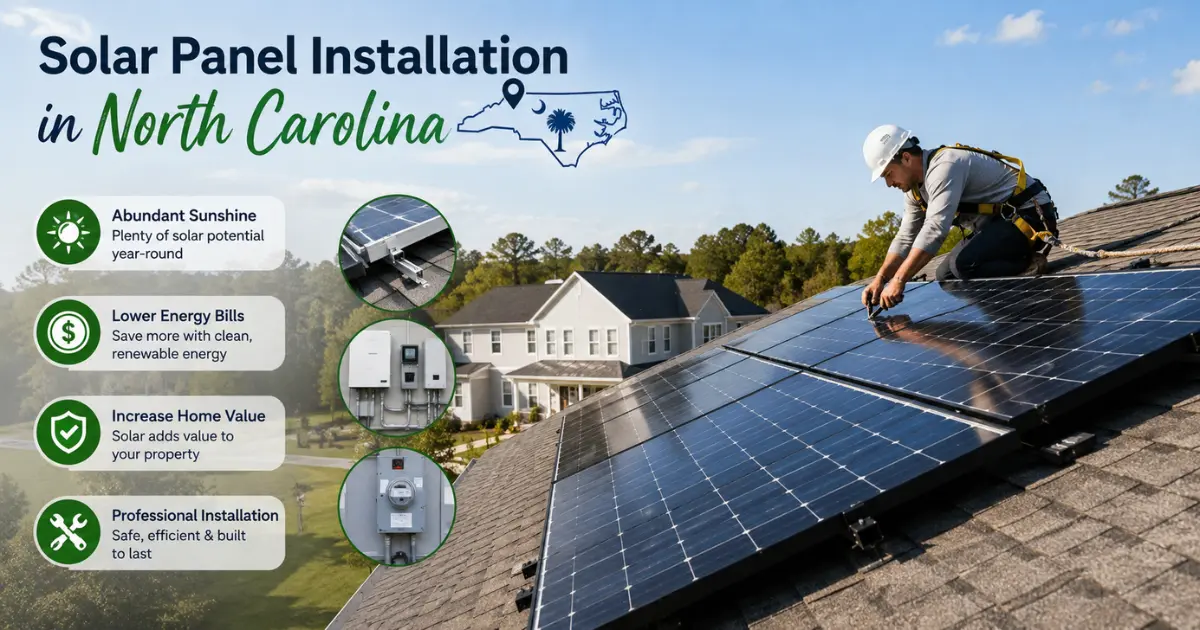
North Carolina homeowners considering solar need to understand more than panel selection and potential savings. The installation process can involve a home and roof assessment, system design, permitting, utility interconnection, installation, inspection, and final approval before the system begins producing electricity. This guide walks you through each step, explains what to expect from a solar installer, and highlights important considerations for homes in North Carolina.
You will also learn which questions to ask before signing a contract, what responsibilities fall to the installer, and where local requirements can affect your installation. The goal is simple: help you make an informed solar decision with fewer surprises along the way.
Is Solar Panel Installation Worth It in North Carolina?
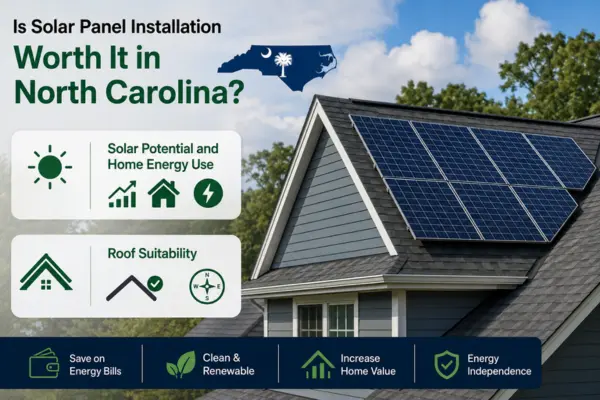
Solar panel installation can be worthwhile for many North Carolina homeowners, but the value depends on the property, energy use, system design, and electric utility. North Carolina has meaningful potential for residential solar, but statewide averages cannot determine whether a particular home is a good candidate. A property-specific assessment is a better starting point before choosing an installer or signing a contract.
Solar Potential and Home Energy Use
A home’s solar potential depends on more than the amount of sunshine in the area. Roof orientation, roof angle, usable surface area, nearby trees, and seasonal shading can influence how much electricity a solar array produces. The U.S. Department of Energy recommends considering factors such as roof size, direction, tilt, shading, location, and system characteristics when evaluating rooftop solar suitability.
Household electricity use is just as important. Review your recent electric bills to understand how much energy your home uses throughout the year and whether usage changes significantly between seasons. An installer can use this information, along with the roof assessment and production estimates, to determine an appropriate system size. The goal is not simply to install as many panels as the roof can hold, but to design a system that matches the home’s energy needs and site conditions.
For a more reliable production estimate, homeowners can use NREL’s PVWatts Calculator or request a site-specific assessment from a qualified solar professional. These approaches can provide a more useful estimate than relying on a statewide average because they account for the property’s location and proposed system characteristics.
Roof Suitability
A suitable roof generally has enough usable space for the proposed array, limited shading, and adequate structural condition. Roof orientation and pitch also influence solar production. South-facing roof areas can perform particularly well, but other orientations may also be viable depending on the home’s layout, shading, roof angle, and system design.
Roof age should be checked before installation. If a roof is approaching the end of its useful life, replacing or repairing it before installing solar panels may be more practical than removing the panels later for roofing work. Homeowners should also consider roof penetrations, structural requirements, and any areas that may be unsuitable for panel placement.
For North Carolina homeowners, the best decision starts with the actual property rather than a generic solar estimate. A qualified installer should evaluate the roof, review historical electricity use, assess shading, estimate system production, and explain any site-specific limitations before proposing an installation.
Bottom line: Solar can be a strong option for a North Carolina home when the roof is suitable, the property receives adequate sunlight, and the proposed system is appropriately sized for household energy use. Before moving forward, homeowners should evaluate their roof and electricity consumption, understand the local installation requirements, and compare proposals from qualified installers.
What You Need Before Installing Solar Panels
North Carolina does not currently offer a general statewide residential solar tax credit comparable to the former federal credit. However, eligible homeowners may have access to specific state or utility programs. Availability can depend on household eligibility, location, electric utility, and current program rules.
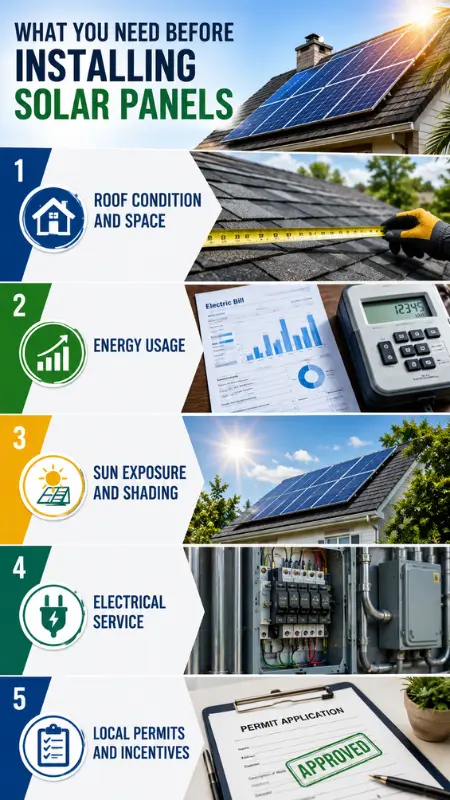
1. Roof Condition and Space
The roof should have enough usable area for the planned solar array and be in suitable condition for a long-term installation. Roof age, structural condition, slope, and available mounting areas can all affect where panels can be installed.
If the roof is nearing the end of its useful life, completing repairs or replacement before installing solar may be more practical. Solar panels and mounting equipment can require additional labor to remove and reinstall if major roofing work is needed later.
The installer should also identify obstructions such as vents, chimneys, skylights, and roof sections that cannot accommodate panels. The final design should use the available roof space efficiently without compromising access or installation requirements.
2. Energy Usage
Your electricity consumption is one of the main inputs used to size a solar system. Review at least several months of utility bills, and preferably a full year, to identify your home’s typical and seasonal electricity use.
Households with higher consumption may require a larger solar array, while homes with lower usage may need a smaller system. Future changes should also be considered. Adding an electric vehicle, heat pump, pool equipment, or other major electrical loads can increase electricity demand.
A good system design should be based on actual consumption and realistic solar production estimates rather than simply filling the available roof with panels.
3. Sun Exposure and Shading
Solar panels need adequate sunlight throughout the day to produce electricity efficiently. Roof orientation, tilt, surrounding trees, neighboring buildings, chimneys, and other structures can create shading that reduces production.
An installer should evaluate shading across the roof and account for seasonal changes where appropriate. A roof that receives strong sunlight during one part of the year may experience more shading at another time.
The assessment should also identify the most productive roof areas and determine whether the proposed panel layout can meet the home’s energy goals without placing panels in heavily shaded locations.
4. Electrical Service
The home’s existing electrical system should be reviewed before installation. The installer may need to assess the main electrical panel, service capacity, wiring, grounding, and the proposed connection between the solar system and the home’s electrical equipment.
Older homes or properties with limited electrical capacity may require upgrades before the solar system can be connected. The extent of any required work depends on the existing equipment and the proposed system design.
Homeowners should ask the installer to identify any electrical upgrades early and clearly explain whether they are included in the proposal. Understanding this before work begins can help avoid unexpected changes to the project scope.
Before signing a solar installation contract, make sure the installer has evaluated the roof, reviewed your electricity use, assessed shading, and confirmed that the home’s electrical service can accommodate the proposed system. These four checks provide a practical starting point for a properly designed residential solar installation in North Carolina.
How Solar Panel Installation Works in North Carolina
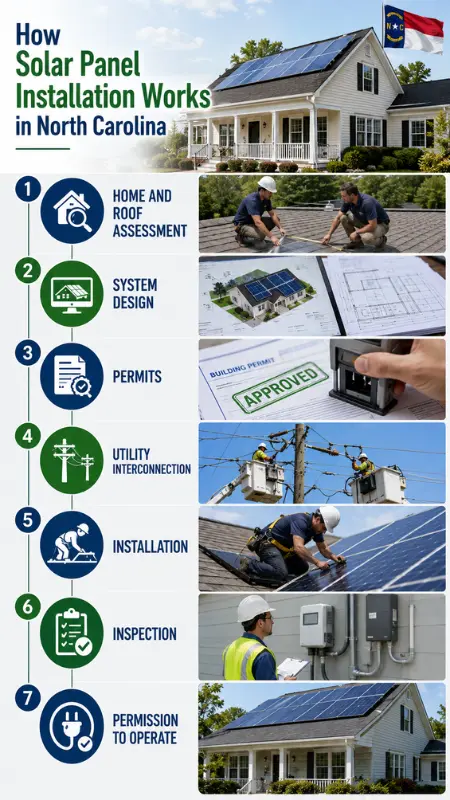
The solar panel installation works through planning, and execution. North Carolina home involves several connected steps, from evaluating the property to receiving authorization to operate the finished system. Requirements and timing can vary by local permitting authority, electric utility, and project. The stages below provide a general overview of what homeowners can expect.
1. Home and Roof Assessment
The process starts with an evaluation of the home and roof. The installer checks the roof’s condition, usable area, orientation, slope, shading, and potential panel locations. The home’s electrical service may also be reviewed to identify issues that could affect the proposed system.
This assessment determines whether the property is suitable for solar and provides the information needed to develop an installation plan.
2. System Design
The installer uses the site assessment and the home’s electricity consumption to design the solar system. The design typically establishes the panel layout, system size, inverter configuration, mounting equipment, and estimated electricity production.
The proposed layout should account for roof limitations and shading while providing a system size appropriate for the home’s energy needs.
3. Permits
Before construction begins, the project may require building and electrical permits from the applicable local authority. Requirements can differ between North Carolina jurisdictions.
The installer generally prepares the technical documents and submits the required applications. Before signing a contract, homeowners should confirm which permits are required, who will obtain them, and whether related fees are included in the project scope.
4. Utility Interconnection
A grid-connected solar system must complete the applicable utility interconnection process before it can operate with the electrical grid. The utility reviews the proposed connection and establishes the requirements for safe grid operation. The installer often helps prepare the technical information and application.
Depending on the utility and project, the application can include system specifications, electrical information, equipment details, and other documentation. Homeowners should ask the installer which parts of the interconnection process they will handle and when the application will be submitted.
5. Installation
After the required approvals are in place, the installation crew can begin physical work. This typically includes installing the mounting system, attaching the solar panels, installing the inverter and other required equipment, and completing the electrical connections.
The completed installation should follow the approved design and applicable building and electrical requirements. The installer should also verify the system before requesting the required inspection.
6. Inspection
Once installation is complete, the system may need to be inspected by the appropriate authority. The inspection checks whether the installation meets applicable requirements and corresponds with the approved project plans.
If an issue is identified, the installer generally corrects it before the project moves to the utility’s final approval stage.
7. Permission to Operate
For a grid-connected system, the final step is typically receiving Permission to Operate (PTO) from the electric utility. PTO indicates that the required interconnection process has been completed and the system is authorized to operate under the utility’s requirements.
Homeowners should not assume that the panels can be turned on immediately after installation or inspection. The installer or utility should confirm when the system has received authorization to operate.
The solar panel installation process is: home and roof assessment → system design → permits → utility interconnection → installation → inspection → PTO. Knowing these steps helps North Carolina homeowners understand what happens during installation and what to confirm with an installer before the project begins.
North Carolina Solar Permits and Utility Interconnection
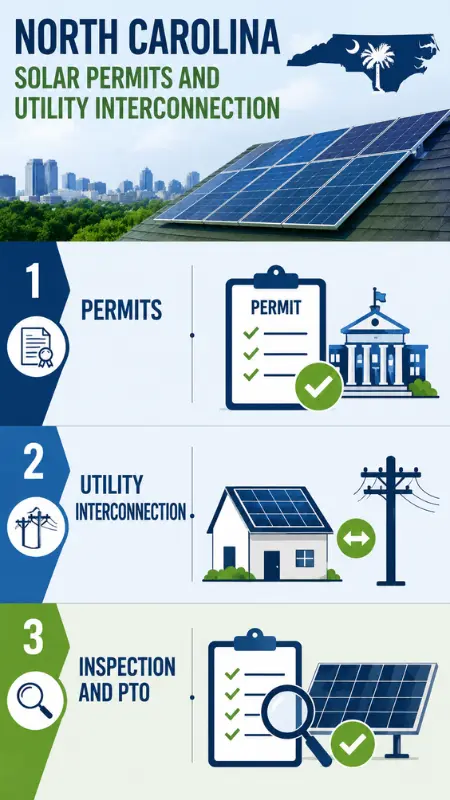
Permits and utility approval are separate parts of a residential solar project in North Carolina. The local permitting authority handles applicable construction and electrical approvals, while the homeowner’s electric utility reviews the proposed grid connection. Requirements can vary by location and utility, so homeowners should confirm the process before installation begins.
1. Permits
Residential solar projects may require local building and electrical permits before installation. The exact requirements depend on the jurisdiction and the scope of the project.
In most cases, the solar installer prepares the system plans and submits the required permit applications. Homeowners should confirm whether permit applications, fees, and inspection coordination are included in their installation agreement.
It is also important to distinguish local residential permitting from state programs that apply to larger or different types of solar projects. North Carolina’s state environmental permitting programs do not replace the local approvals that may apply to a residential rooftop system.
2. Utility Interconnection
If the solar system will remain connected to the electric grid, the homeowner must complete the applicable utility interconnection process. North Carolina Public Staff advises customers to contact their electric utility for an interconnection application before connecting a renewable energy system to the utility system. The review process can vary according to the system and where it connects to the utility network.
The application generally requires information about the proposed solar system and its electrical configuration. The installer can often prepare the technical information and help the homeowner complete the process, but the utility ultimately determines whether the proposed connection meets its requirements.
Homeowners should also identify their electric utility early because North Carolina has investor-owned utilities as well as municipal and cooperative utilities, and program requirements are not necessarily identical across providers.
3. Inspection and PTO
After the solar installation is completed, the project may need to pass the applicable local inspection before the utility can complete its final interconnection requirements. The inspection verifies that the installed work complies with the applicable requirements and approved project documents.
Permission to Operate (PTO) is the utility’s authorization for a grid-connected solar system to operate. Homeowners should wait for the required utility authorization rather than assuming that a system can be switched on immediately after installation or inspection.
The timing between inspection and PTO can depend on the utility and project. Your installer should explain which steps they handle, what remains outstanding, and how you will know when the system is officially authorized to operate.
For homeowners, the practical sequence is: local permits → solar installation → inspection → utility interconnection approval → PTO. Confirming these responsibilities with both the installer and electric utility before work begins can help prevent avoidable delays.
How Long Does Solar Installation Take in North Carolina?
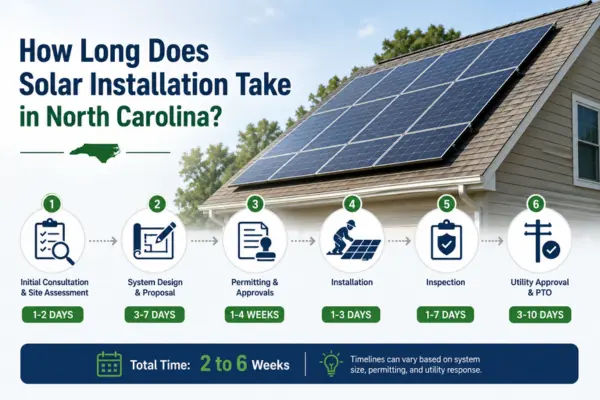
There is no single statewide timeline for residential solar installation in North Carolina. The total time depends on the property, local permitting process, electric utility, and project complexity. The physical installation may take much less time than the permitting, inspection, and utility approval stages.
- Site assessment and system design: The installer evaluates the property, roof, electricity use, and system requirements.
- Permitting and approvals: Required local permits and utility interconnection paperwork are prepared and reviewed.
- Solar installation: Once the necessary approvals are in place, the crew installs the panels, mounting equipment, inverter, and electrical components.
- Inspection: The completed system is inspected to verify that the installation meets applicable requirements.
- Utility approval and PTO: The utility completes its final interconnection process and provides Permission to Operate when the system is authorized for grid operation.
The physical installation is only one part of the overall timeline. Permitting, utility review, inspection, and PTO can take longer and vary between projects.
- Providing accurate electricity bills and property information
- Addressing roof repairs before installation
- Confirming who handles permits and utility paperwork
- Responding promptly if additional documents are requested
- Asking the installer for a project-specific timeline
In short: Don’t judge the project timeline by how long the installation crew is on your roof. The complete process from initial assessment through PTO depends heavily on permitting and utility approval in addition to the actual installation work.
How Much Does Solar Installation Cost in North Carolina?
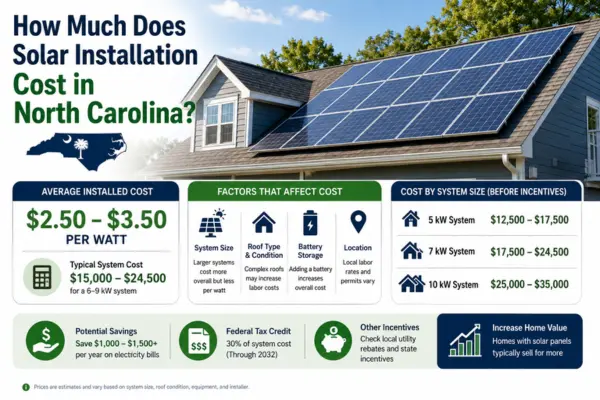
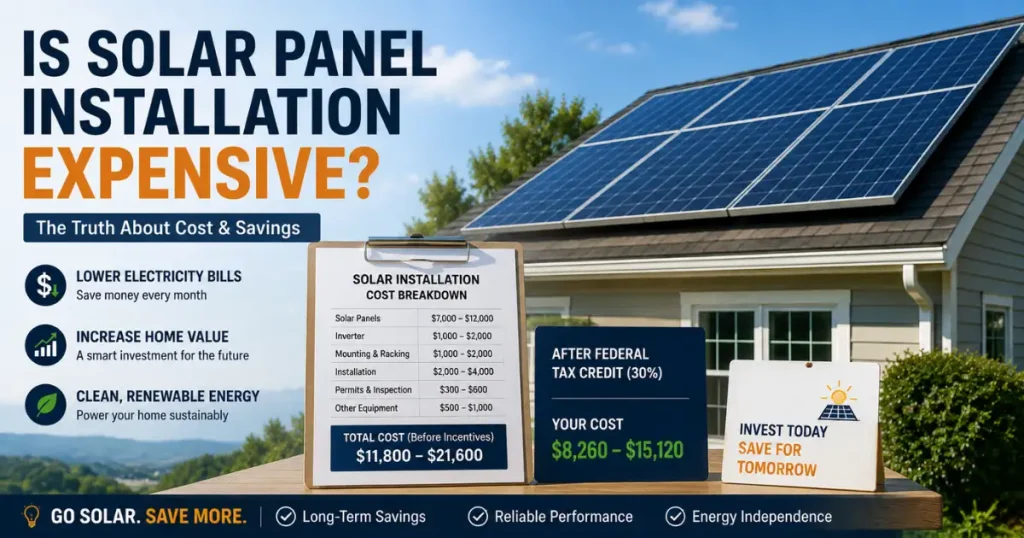
Solar installation costs in North Carolina vary from one property to another, so there is no single price that applies to every homeowner. The final quote depends on the specific system proposed for the home and the work required to complete the project.
When comparing solar proposals, look beyond the advertised price. Review the total project cost, system size, included equipment, installation scope, and financing terms.
For detailed North Carolina pricing, including cost by system size, cost per watt, what is included in an installation quote, and potential additional expenses, see our dedicated Solar Panel Installation Cost in North Carolina guide.
Bottom line: Your actual solar installation cost can only be determined accurately from a property-specific proposal. Comparing the complete scope of each quote is more useful than relying on a generic statewide figure.
1. Choosing a Solar Installer in North Carolina
Choosing the certified solar installer is about more than comparing the lowest quote. Homeowners should evaluate the company’s credentials, the equipment and warranties offered, the contract terms, and how clearly the installer explains the project. A qualified installer should also be able to explain who will handle permitting, utility coordination, installation, and follow-up service.
2. Licensing and Credentials
Before signing a contract, verify that the company is properly licensed for the work it performs and ask about relevant industry credentials. Licensing requirements can depend on the type and scope of electrical work involved.
Homeowners can also check:
- Required North Carolina licensing.
- Relevant professional certifications.
- Insurance coverage.
- Experience with residential solar projects.
Do not rely on a company’s marketing claims alone. Verify credentials through the appropriate licensing or certification organization when possible.
3. Equipment and Warranties
Ask exactly which panels, inverters, mounting equipment, and other major components will be installed. The proposal should identify the equipment rather than using vague descriptions such as “premium panels.”
Also review:
- Product warranties
- Workmanship or installation warranty
- Warranty claim process
- Who provides service if a component fails
A longer warranty is not necessarily better; check what it covers, what exclusions apply, and who handles warranty claims.
4. Proposal and Contract
A solar proposal should clearly describe what you are purchasing and what the installer is responsible for completing. Before signing, review the contract for the system size, total price, equipment, installation scope, warranties, payment terms, and cancellation provisions.
Ask the installer to explain anything that is unclear before committing. Written terms are more useful than verbal promises if questions arise later.
5. Permits and Interconnection
Confirm whether the installer will handle the required permits and utility interconnection paperwork. The contract should make these responsibilities clear rather than leaving homeowners to determine them after the project begins.
Also ask:
- Who submits the applications?
- Who coordinates inspections?
- Are applicable fees included?
- Who communicates with the utility?
- What happens if additional requirements arise?
6. Comparing Quotes
When comparing solar installers, don’t choose solely on the lowest upfront price. Make sure the proposals describe comparable systems and services.
Compare:
- System size and estimated production.
- Equipment included.
- Installation scope.
- Warranty coverage.
- Total project price.
- Financing terms, if applicable.
- Responsibilities after installation.
A slightly higher quote may offer better equipment, service, warranty coverage, or a more complete installation scope. The goal is to compare the total value and contract terms—not just the headline price.
Bottom line: A good North Carolina solar installer should be able to provide verifiable credentials, clearly specified equipment, straightforward contract terms, and a transparent explanation of permitting, utility coordination, installation, and warranty responsibilities.
Solar Equipment for a North Carolina Home
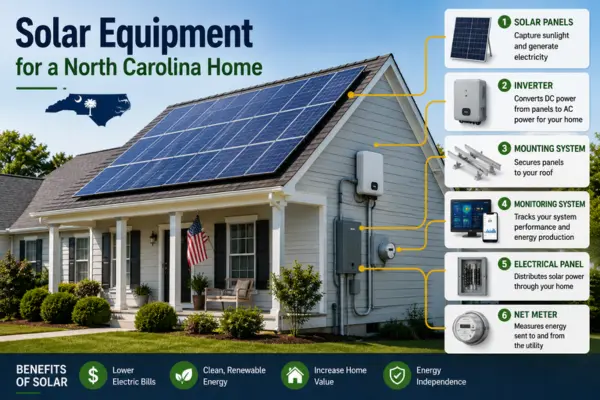
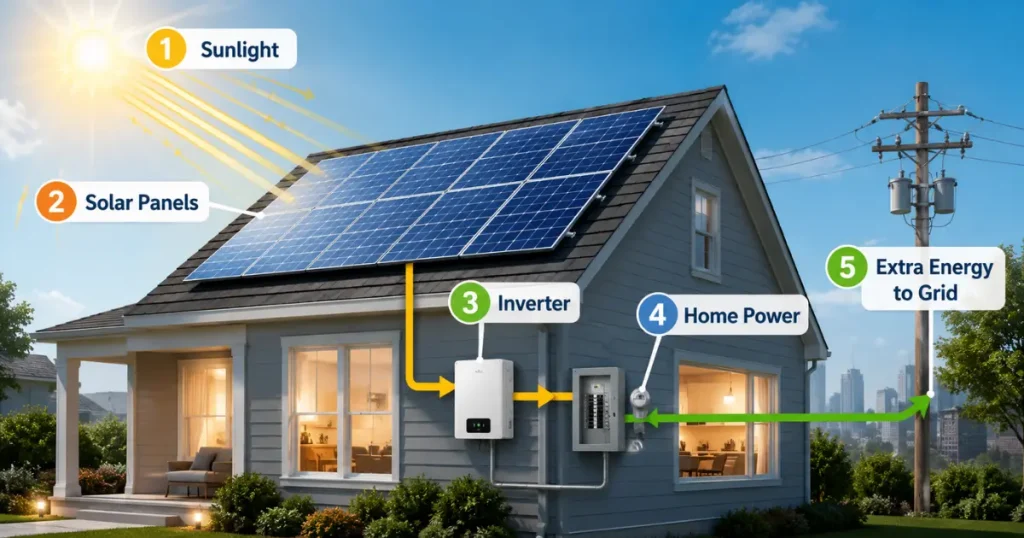
A residential solar system consists of several components that work together to convert sunlight into usable electricity and connect the system safely to the home. Homeowners should understand the role of each major component before comparing installation proposals.
1. Panels
Solar panels convert sunlight into direct-current (DC) electricity. The number and placement of panels depend on the home’s energy needs, available roof space, shading, and system design.
When reviewing a proposal, check:
- Panel manufacturer and model
- Rated power output
- Product and performance warranties
- Proposed panel layout
The highest-rated panel is not automatically the best choice; the equipment should suit the home’s roof and energy requirements.
2. Inverters
An inverter converts the electricity produced by solar panels into alternating current (AC) that the home can use. The system may use a central string inverter, microinverters, or another approved configuration.
Homeowners should check:
- Inverter type and manufacturer
- Warranty coverage
- Monitoring capabilities
- Compatibility with the proposed system
The appropriate configuration depends on the system design, roof layout, shading, and other project requirements.
3. Mounting
The mounting system secures the panels to the roof or another approved structure. Its design must account for the roof type, panel layout, weather conditions, and applicable installation requirements.
The proposal should clearly identify the mounting equipment and explain how it will be installed. Homeowners should also understand whether roof repairs or structural work are required before mounting begins.
4. Battery Storage
A battery can store solar electricity for later use, depending on the system’s configuration and operating settings. It can also provide backup power for selected loads or the home when the system is designed and equipped for backup operation. A battery may be worth considering when a homeowner wants:
- Backup power during outages
- Greater control over when stored solar energy is used
- A system designed around specific utility or energy-use considerations
A standard grid-connected solar system generally does not keep a home powered during a utility outage unless it includes appropriate battery storage and backup equipment.
North Carolina Solar Incentives and Utility Programs
Solar incentives and utility programs can affect the overall economics of a residential solar project, but eligibility and availability depend on current federal rules, state policies, and the homeowner’s electric utility. Because these programs can change, homeowners should verify current requirements before including any incentive in their financial calculations.
- Federal Incentives
For homeowners installing solar in 2026, the federal Residential Clean Energy Credit is no longer available for qualifying expenditures made after December 31, 2025. The IRS states that the credit was 30% for eligible property through 2025 and was terminated for expenditures after that date.
Homeowners should therefore:
- Check when the qualifying solar property was placed in service under current IRS rules.
- Verify whether any previously completed qualifying project may still be eligible.
- Keep invoices, contracts, and installation records for tax documentation.
- Consult a qualified tax professional for individual tax questions.
2. State Incentives
North Carolina does not have a general statewide residential solar tax credit comparable to the former federal credit. However, eligible homeowners may have access to specific state or utility programs, including programs targeted at qualifying households. Availability depends on eligibility, location, and the current program rules.
Before signing a contract, verify:
- Your utility’s current solar program
- Interconnection requirements
- How excess electricity is treated
- Any currently available state or utility incentives
Important: Do not calculate your 2026 solar payback using an assumed federal 30% tax credit. Federal and utility rules can change, so use current official information when estimating your actual project economics.
What to Check Before Signing a Solar Contract
Before signing a solar contract, make sure you understand exactly what the installer will provide, what you will pay, and who is responsible for each part of the project. A clear contract can help prevent unexpected costs, delays, or disagreements later.
Check that the agreement clearly states:
- System details: Panel count, system size, major equipment, and expected production.
- Total price: Full project cost, payment schedule, and any additional charges.
- Installation scope: What work is included, including electrical or roof-related work if applicable.
- Permits and interconnection: Who handles applications, fees, inspections, and utility coordination.
- Warranties: Coverage for equipment, workmanship, and any limitations or exclusions.
- Financing terms: Interest rate, loan term, fees, and total repayment if financing is used.
- Project timeline: Expected installation, inspection, and authorization milestones.
- Cancellation terms: Conditions, deadlines, and potential charges for cancelling the agreement.
- Post-installation service: Who to contact for system problems, warranty claims, or service needs.
Before signing, ask the installer to explain anything you do not understand and make sure important promises are included in the written contract—not only discussed verbally.
Frequently Asked Questions
How long does installation take?
The overall solar project timeline depends on the home, permitting authority, electric utility, and project complexity. The physical installation is only one stage; permitting, inspection, interconnection, and Permission to Operate can also affect how long the process takes.
Do I need a permit?
Residential solar projects in North Carolina may require local building and electrical permits. Requirements vary by jurisdiction, so your installer should confirm which permits apply and whether they will handle the applications and related fees.
Does my utility approve the system?
Yes, a grid-connected solar system generally must go through the applicable utility interconnection process before it can operate with the grid. The utility reviews the proposed connection and provides the required authorization before the system can operate.
Can solar go on an older roof?
Yes, but the roof should be assessed before installation. If the roof needs major repairs or replacement soon, completing that work before installing solar may avoid the cost and inconvenience of removing the panels later.
Do I need a battery?
No, a battery is not required for every residential solar system. Whether one makes sense depends on the homeowner’s goals, such as backup power, energy usage patterns, and the way the home’s solar system interacts with the utility.
What happens after installation?
After the equipment is installed, the project may need to pass inspection and complete the remaining utility interconnection steps. Once the utility provides Permission to Operate (PTO), the homeowner can operate the grid-connected system according to the utility’s requirements.
Conclusion
Solar panel installation in North Carolina involves more than putting panels on a roof. Homeowners should evaluate the property, understand the installation process, confirm permitting and utility requirements, compare installers, and review the contract before signing.
The key is to make decisions based on the home’s actual conditions, energy needs, project requirements, and current utility and incentive rules. Choosing a qualified installer and understanding the process from assessment through PTO can help homeowners avoid unnecessary surprises and make a more informed decision about going solar.