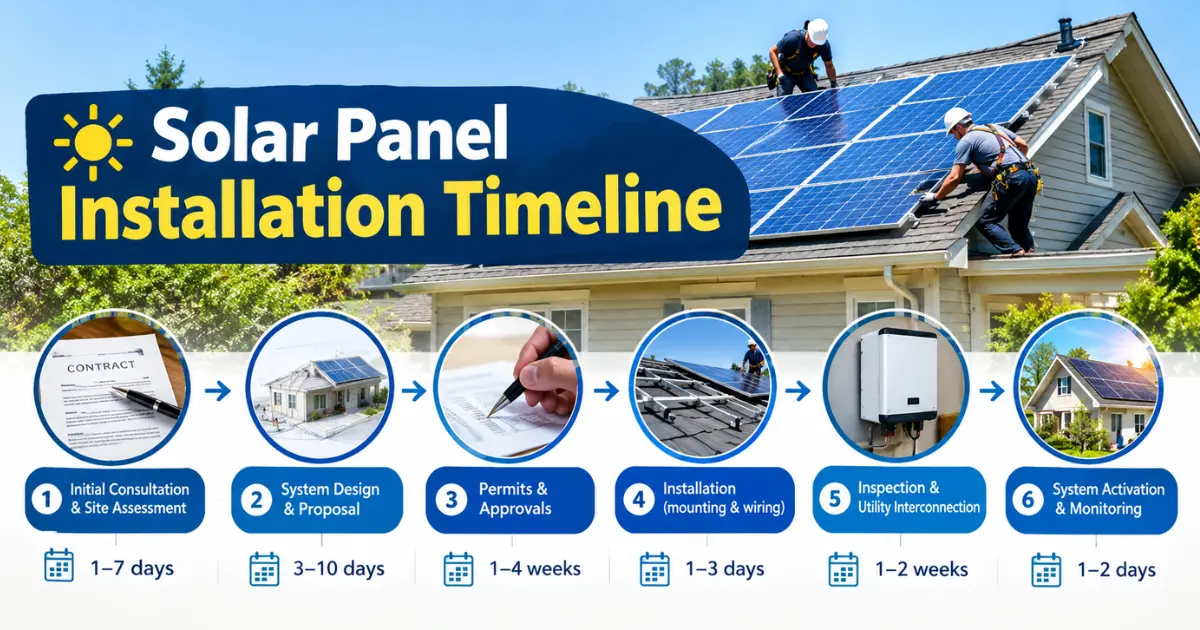
A residential solar panel installation in the U.S. takes about 2–5 months from the initial site assessment to Permission to Operate (PTO). However, the actual rooftop installation usually takes only 1–3 days. Most of the overall timeline is spent on system design, local permits, inspections, equipment scheduling, and utility interconnection.
at-a-glance solar installation timeline
| Step | Typical U.S. Time |
| Site Assessment | 1–7 days |
| System Design & Engineering | 3–10 days |
| Permitting | 1–3+ weeks |
| Equipment Ordering & Scheduling | 1–4 weeks |
| Installation Day | 1–3 days |
| Post-Installation Inspection | A few days–2+ weeks |
| Utility Interconnection & PTO | 2–6+ weeks |
Step 1 – Site Assessment
Typical time: 1–7 days
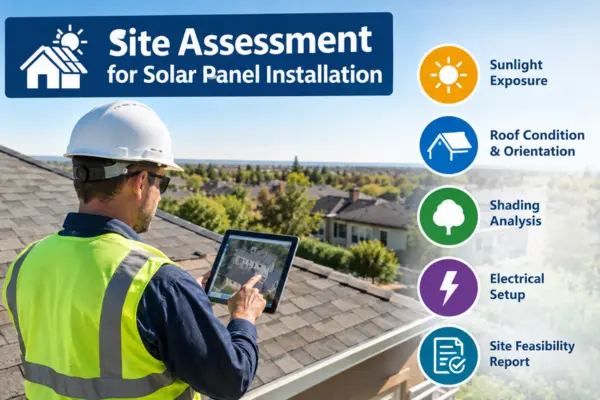
For a typical U.S. home solar project, the site assessment can usually be completed within 1–7 days, depending on certified installer availability and property complexity. The installer evaluates the roof condition, shading, available roof space, electrical setup, and solar potential. A straightforward home may require only a brief assessment, while structural or electrical concerns can add extra time.
Step 2 – System Design & Engineering
Typical time: 3–10 days
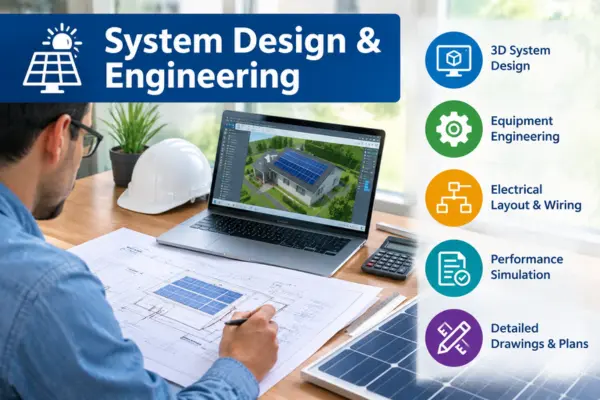
Once the site assessment is complete, residential solar system design and engineering typically takes 3–10 days. The installer finalizes the system size, panel layout, inverter configuration, electrical design, and other technical details. A simple rooftop system may move quickly, while complex roof layouts, structural requirements, battery storage, or design revisions can extend this stage.
Step 3 – Permitting (Local Building Department)
Time takes: 1–3 weeks
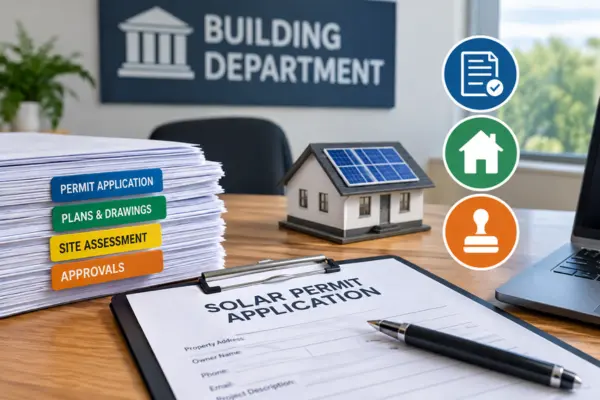
For a U.S. residential solar system, local permitting takes 1–3 weeks, but the actual wait depends heavily on the building department and permit process. Automated systems can be much faster, while manual reviews may take several weeks or longer. California data illustrates this variation: residential rooftop solar permits average 13–19 days, but some take more than 60 days
Added disclaimer line (fixes California-as-national-norm issue): Permitting timelines vary significantly by state, city, and utility; some jurisdictions process permits in days through automated online systems, while others with manual review can take a month or more. Check your local building department’s turnaround before finalizing your project timeline.
Step 4 – Equipment Ordering & Installer Scheduling
Typical time: 1–4 weeks
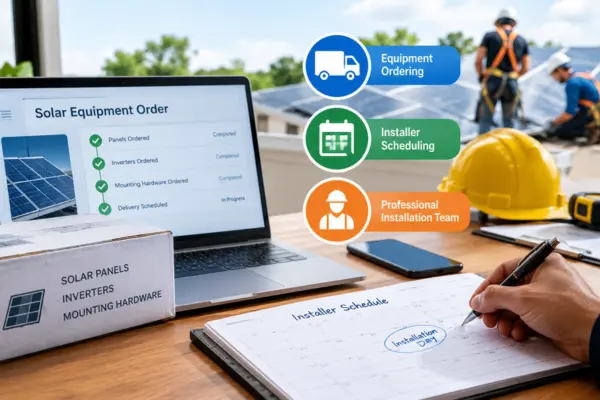
After the project is ready to move forward, equipment ordering and installation scheduling generally takes 1–4 weeks for a U.S. home solar system. Standard panels and inverters that are in stock can arrive sooner, while specific equipment, batteries, or busy installer schedules may extend the wait. In many projects, equipment procurement can overlap with permitting, reducing the total calendar time.
Step 5 – Installation Day
Typical time: 1–3 days
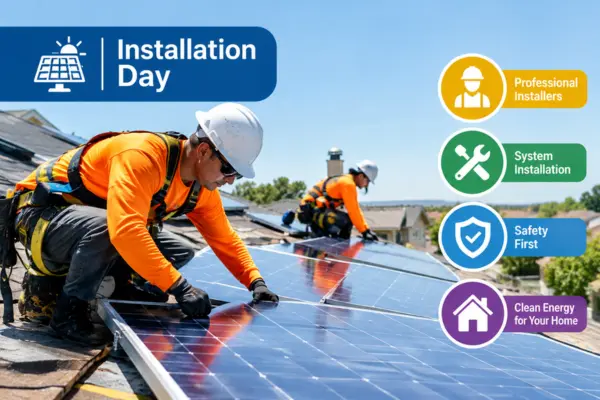
The actual rooftop installation is usually one of the fastest stages of a U.S. residential solar project. A standard home solar system can often be installed in 1–3 days, depending on system size, roof design, electrical work, and whether battery storage is included. NREL’s residential data shows installation itself is measured in days, although scheduling can add calendar time.
Step 6 – Post-Installation Inspection
Typical time: 1–2 weeks
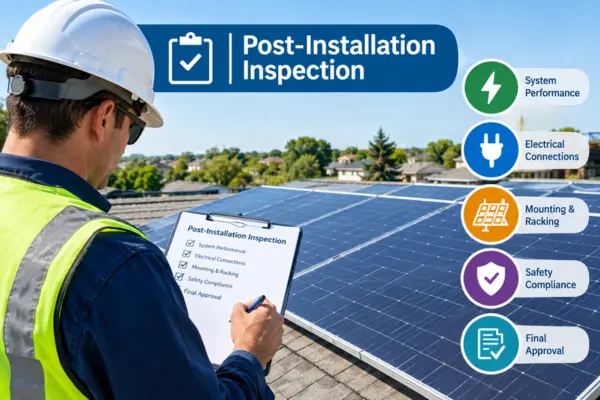
After installation, the local authority generally needs to inspect the completed system before the utility can receive the final interconnection paperwork. For a straightforward residential project, this stage can take several days to about 2 weeks, but local scheduling varies significantly. NREL data shows inspection timelines ranging from 4–6 days in some datasets to much longer in others.
Step 7 – Utility Interconnection & Permission to Operate (PTO)
Typical time: 2–6+ weeks often the biggest bottleneck
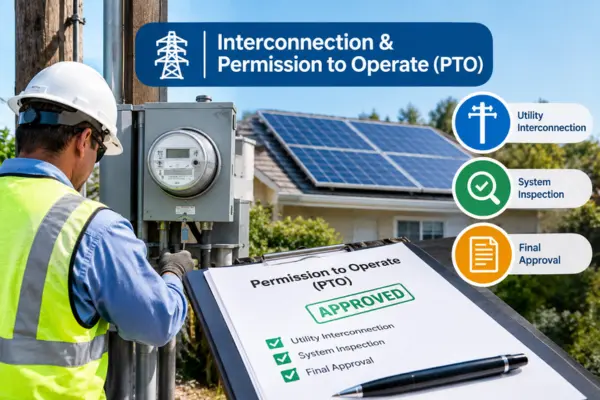
Utility interconnection and PTO can take 2–6+ weeks for a U.S. home solar system, with some projects moving faster and others taking considerably longer. After inspection, the utility reviews the final interconnection documents and authorizes grid operation. NREL’s recent nationwide research shows utility and interconnection timelines vary widely, and some processes can add weeks or even months to a project.
How Getting Multiple Installer Quotes Affects Your Timeline
Getting at least three quotes is standard advice, and it does add time upfront, the quote-gathering phase alone can take a few days to a few weeks depending on installer availability. But this is the cheapest place to spend extra days, since nothing downstream (permitting, ordering, interconnection) has started yet.
The real risk isn’t gathering quotes, it’s comparing them wrong. Quotes should be compared on equivalent terms: same system size, panel brand tier, and inverter type. The most common mistake is getting only one quote, or getting several and never comparing them properly.
Which often means picking the “faster, cheaper” option without checking why it’s cheaper. A lower quote from an installer with a longer install backlog or less permitting experience can erase any time saved during shopping. Before signing, ask how many weeks out their crew is booked and how many systems they’ve installed with your utility.
Does Financing Type (Cash, Loan, Lease) Affect the Timeline?
Financing mainly affects how fast you get to a signed contract, not how fast permitting or utility interconnection move afterward, since those run on the same clock regardless of payment method.
Cash: has no lender approval step, though payment is still usually staged across milestones (deposit, design approval, etc.).
Loans: add a quick pre-qualification (soft credit check) plus a full application once you’re ready to sign over 90% of U.S. residential installations now use some form of financing this way. The exception is a HELOC, which is secured against your home and requires an appraisal, adding real time before design even starts.
Leases and PPAs: need contract approval from the leasing company before install begins, similar to a loan. Where they actually cause delay is later if you sell the home before the term ends, the buyer must separately qualify to assume the contract. That’s a resale issue, not an installation-timeline one.
Once financing is approved, payment methods stop affecting speed permitting and interconnection moves at the same pace whether the system was paid for in cash or financed.
What Causes Solar Installation Delays (and How to Avoid Them)
Most solar installation delays come from three sources: permitting, equipment, and installer scheduling not the install itself.
Permitting: causes the most delays. An incomplete application, wrong equipment specs, or a generic plan set that doesn’t match your roof triggers a rejection and resubmission cycle. HOA approval runs separately and can stall a project if it’s not cleared before permitting.
Equipment: especially batteries often have longer lead times than standard panels or inverters, pushing back scheduling even after permits are clear.
Installer availability: compounds both: during high-demand periods, the same permitting and scheduling steps simply take longer.
Best time to install: Summer is peak season, with installer wait times of 6–10 weeks. Fall and spring are off-peak, with waits closer to 3–4 weeks and faster permitting timing doesn’t affect how well the system performs once it’s live.
To avoid delays: pick an installer experienced with your specific city’s permitting process, confirm equipment is in stock before signing, and install outside the spring/summer rush if your schedule is flexible.
Solar Installation Cost vs. Timeline: Does a Bigger System Take Longer?
A little, but only at one specific stage.
Installation day is where size matters most: a small system can be done in a day; a larger array typically takes two to three days.
Design, permitting, and interconnection barely change with system size, they run on the same 3–10 day design window and the same utility/AHJ queue regardless of how many panels you’re installing.
Battery storage adds more time than size alone, added wiring complexity and longer battery lead times, not panel count, are the real factors.
Bottom line: a bigger system may add a day to installation, not weeks to your overall timeline. Permitting speed and installer backlog decide whether your project takes 2 months or 5 not system size.
FAQs
How long does it take to install solar panels?
A typical U.S. residential solar installation takes 2–5 months from contract to Permission to Operate (PTO). The physical installation itself only takes 1–3 days the rest of the time goes to design, permitting, equipment scheduling, and utility interconnection.
What is the longest step in the solar installation process?
Utility interconnection and PTO approval is usually the longest step, often taking 2–6+ weeks. Unlike installation or design, this stage depends entirely on your utility’s review queue, which is largely outside your installer’s control.
Does getting a bigger solar system take longer to install?
Only slightly, and only on installation day a larger system may take 2–3 days on-site versus 1 day for a smaller one. Design, permitting, and interconnection take roughly the same time regardless of system size.
Can I speed up my Permission to Operate (PTO) approval?
Not directly, since PTO timing depends on your utility’s queue. You can avoid added delay by choosing an installer experienced with your utility and ensuring your interconnection application is complete and accurate the first time.
Does adding a battery increase the installation timeline?
Yes. Batteries typically have longer equipment lead times than panels or inverters, and the added wiring increases installation complexity and can add days to weeks to your overall project timeline.
Does financing type (cash, loan, lease) affect how fast I go solar?
It mainly affects how fast you reach a signed contract, not the permitting or interconnection stages after. Cash skips lender approval; loans add a quick pre-qualification step; leases and PPAs need the leasing company’s contract approval first.
Final Takeaway
A solar installation timeline isn’t one number, its seven stages, each moving at its own pace. Site assessment, design, and install day depend on your property and installer; permitting, inspection, and utility interconnection depend on your local building department and utility.
Knowing this breakdown means the “wait” makes sense: a permit in review or a utility taking weeks on paperwork isn’t a stalled project, it’s the normal back half of the process. That’s what turns “2 to 5 months” from a vague estimate into something you can actually plan around, and gives you the right question to ask your installer: which stage are we in, and what’s next.