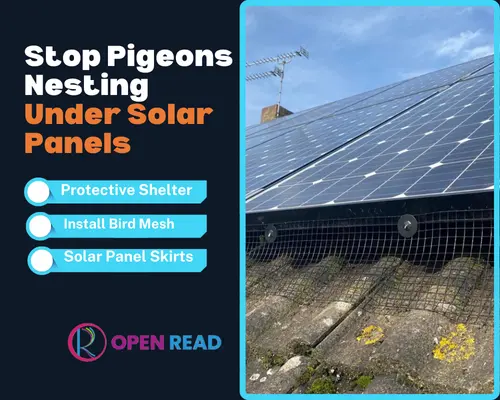
To stop birds from nesting under solar panels, the most reliable method is to install a solar panel critter guard. This is a PVC-coated wire mesh that wraps around the entire edge of your solar array. Attach it with special non-penetrating clips or J-hooks that clamp onto the panel frames. These clips never drill into the roof or panels, so your solar warranty stays fully valid.
Before adding the mesh, carefully remove any old nests and clean off bird droppings. Always check first for eggs or baby birds. Under the Migratory Bird Treaty Act, active nests are protected by U.S. law, and removing them can lead to fines. Once the area is clear and dry, the mesh creates a permanent barrier that keeps birds out for years while still allowing air to flow under the panels.
Why Do Birds Love Nesting Under Solar Panels?
Birds look for safe, quiet spots to raise their young, and the space under solar panels often feels perfect to them. The panels sit a few inches above the roof, creating a hidden pocket that many common birds in the United States quickly discover.
Shelter from Weather and Predators
Rain, wind, and hot sun stay mostly outside the panel gap. Birds can tuck their nests underneath and stay dry during storms. Hawks and cats have a harder time reaching them too. For species like sparrows, starlings, and pigeons that live near homes, this covered space feels safer than open trees or ledges.
Warmth Generated by Inverters and Wiring
Solar systems produce a gentle heat, especially near the inverter and electrical wires. On cool nights or early spring mornings, that extra warmth helps eggs and chicks stay comfortable. Birds notice the difference and often return to the same warm spots year after year.
The Hidden Dangers of Birds Under Your Solar Array
What feels cozy for birds can cause real problems for homeowners. Nests and droppings build up quietly under the panels and start creating risks that many people do not notice until the damage is already done.
Solar Efficiency Loss from Bird Droppings
Bird droppings dry into a hard white layer that blocks sunlight from reaching the solar cells. Even a thin coating can cut power production. When droppings cover several panels, a typical home system may lose 15 to 30 percent of its daily energy output. That means higher electricity bills and less savings from the solar investment.
Fire Hazards and Damaged Wiring
Dry nesting material such as twigs, leaves, and feathers sits right next to electrical wires and connectors. If a wire becomes damaged or overheats, the nest can catch fire. Birds also chew on insulation, which exposes live wires and raises the chance of short circuits. These problems can start small and grow into serious safety risks under the array.
Property Damage and Roof Leaks
Over time, droppings and nesting debris trap moisture against the roof surface. In many U.S. homes with asphalt shingles, this moisture leads to soft spots, mold, and eventual leaks. The weight of large nests can also press on the roof and create low areas where water collects. Fixing the roof later often costs far more than preventing the nests in the first place.
Important USA Legal Notice: Active vs. Inactive Nests
Before you remove any bird nest from under your solar panels, you need to know the difference between an active nest and an inactive one. Getting this wrong can lead to legal trouble in the United States.
| Feature | Active Nest | Inactive Nest |
| Eggs or Chicks Present | Yes | No |
| Adult Birds Returning | Yes | No |
| Legal to Remove? | No (protected by federal law) | Yes |
| Risk of Fine | High | None (if truly empty) |
| What You Should Do | Leave it alone or call a wildlife expert | Safely remove and clean the area |
| Best Next Step | Wait until birds leave naturally | Install critter guard mesh after |
If you see eggs, chicks, or parent birds coming back, the nest is active and protected under the Migratory Bird Treaty Act. Only empty, dry nests with no bird activity can be removed safely.
Understanding the Migratory Bird Treaty Act
The Migratory Bird Treaty Act is a federal law that protects most native birds in the U.S. This includes common birds that nest under solar panels, such as sparrows, starlings, and many others. The law makes it illegal to disturb, move, or destroy a nest that has eggs or young birds inside. Even if the nest is on your own roof, the federal protection still applies. Breaking this law can result in fines.
When Can You Legally Remove a Bird Nest?
You can safely remove a nest only when it is inactive. An inactive nest has no eggs, no chicks, and no adult birds returning to it. If the nest is empty and dry, and you have watched for a few days with no bird activity, it is usually okay to clear it away. Once the nest is gone and the area is clean, you can install the critter guard mesh. If you are unsure whether a nest is active, the safest choice is to wait or contact a local wildlife expert before touching anything.
How to Prevent Birds Nesting Under Solar Panels (Top Solutions)
Stopping birds from nesting under solar panels is easiest when you choose the right method for your home. Below is a clear comparison of the most common options used by U.S. homeowners.
| Solution | Typical Cost (DIY / Pro) | Effectiveness | Warranty Safe? |
| Solar Panel Critter Guard (Mesh) | $50–$150 / $300–$800 | Very High | Yes |
| Anti-Bird Spikes + Roof Mesh | $40–$120 / $250–$600 | Medium-High | Yes |
| Ultrasonic & Visual Deterrents | $30–$80 / $100–$250 | Low-Medium | Yes |
| Gutter Guard + Regular Cleaning | $20–$60 / $150–$400 | Low | Yes |
1. Solar Panel Critter Guards (Wire Mesh) – The Best Long-Term Solution
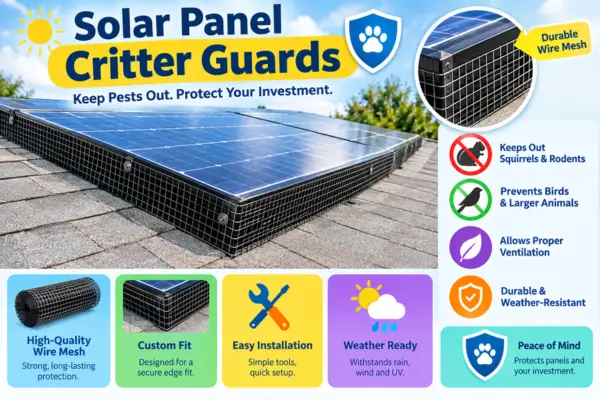
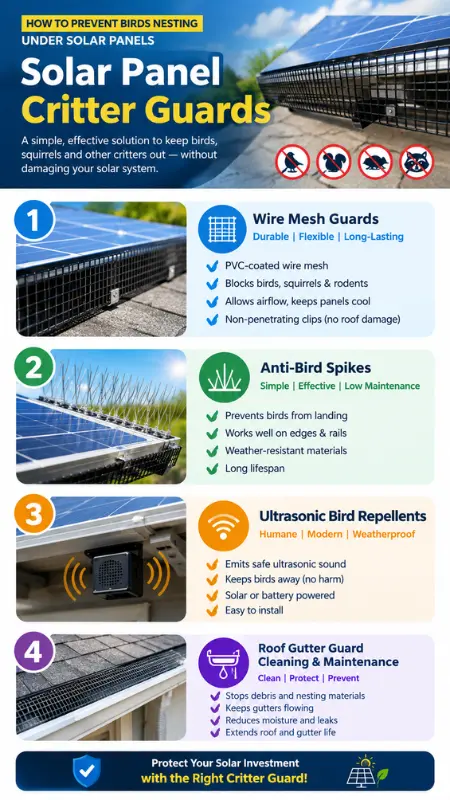
The most effective way to keep birds out is a solar panel critter guard. This is a strong PVC-coated wire mesh that runs around the full edge of your solar array. It blocks birds from entering the space under the panels while still letting air flow freely.
- Always use special non-penetrating clips or J-hooks
- These clips clamp onto the panel frames
- No drilling into the roof or panels is needed
- Your solar warranty stays fully valid
- Once installed, the mesh usually lasts for many years with almost no upkeep
2. Anti-Bird Spikes and Roof Mesh
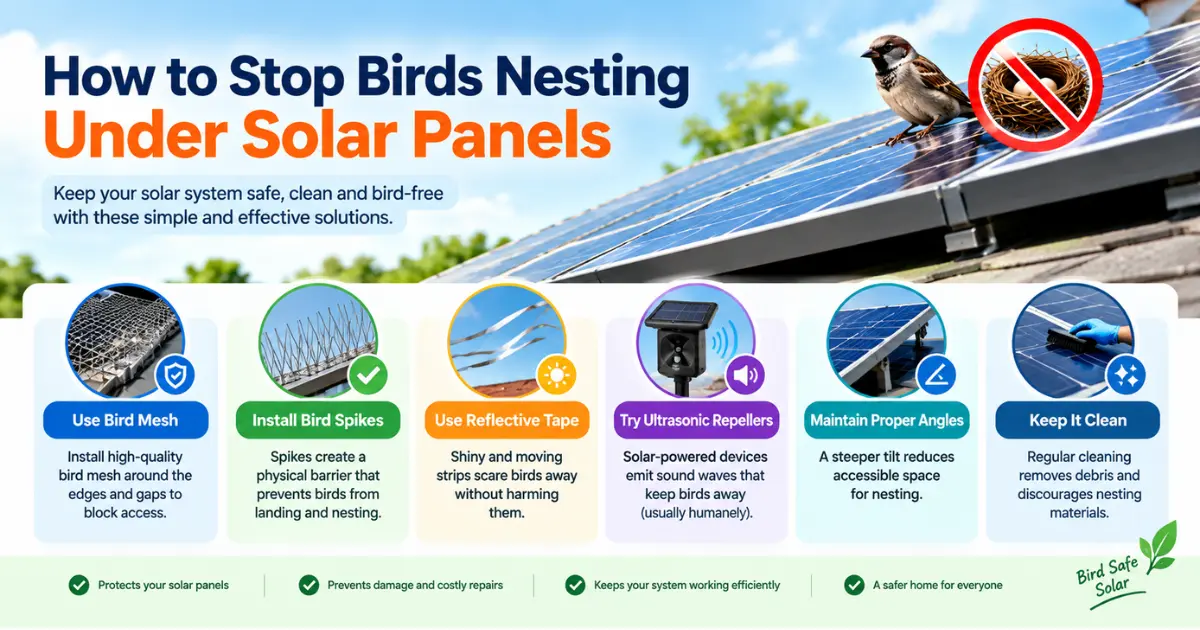
Plastic or metal spikes can be placed along the outer edges of the panels or nearby roof areas. They make it uncomfortable for birds to land. Some homeowners also add extra mesh in open gaps.
- Works better for smaller problem areas
- Can reduce nesting but rarely stops all birds alone
- Often used together with a full critter guard
- Easy to install on edges and gaps
- Needs occasional checking after strong winds or storms
3. Ultrasonic Bird Repellents and Visual Deterrents
Ultrasonic devices send out high-pitched sounds that birds dislike. Visual options include reflective tape, predator decoys, or shiny objects that move in the wind.
- Easy and quick to set up
- Lower cost at the beginning
- Birds often get used to them after a few weeks
- Best as a short-term or temporary fix
- Rarely provides lasting protection under solar panels
4. Roof Gutter Guard Cleaning & Maintenance
Keeping gutters clean and adding gutter guards can reduce leaves and debris that birds like to use for nesting. Regular cleaning and maintenance also helps water drain properly and prevents moisture buildup near the panels.
- Helps with overall roof care
- Reduces material birds use for nests
- Prevents water from sitting near the array
- Does little to stop birds nesting directly under panels
- Works best as a supporting habit, not a main solution
Step-by-Step Guide: How to Safely Remove Bird Nests & Clean Panels
Removing bird nests from under solar panels is simple when you follow the right order. These steps help you stay safe, follow U.S. law, and prepare the area for long-term protection.
Step 1: Inspect for Active Eggs or Chicks
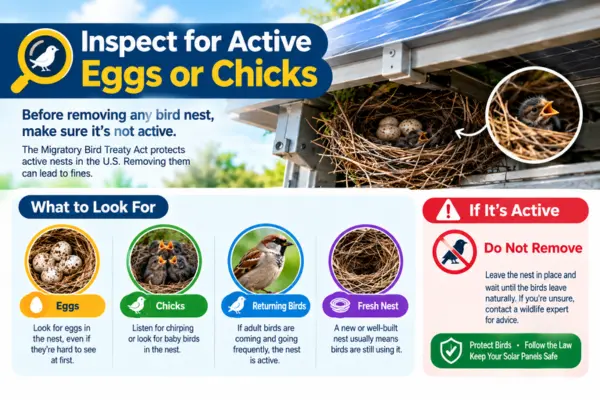
Look carefully under the panels with a flashlight. Check for eggs, baby birds, or adult birds flying in and out. If you see any of these, the nest is active and protected by federal law. Leave it alone and wait until the birds leave on their own.
Step 2: Turn Off the Solar PV System for Safety
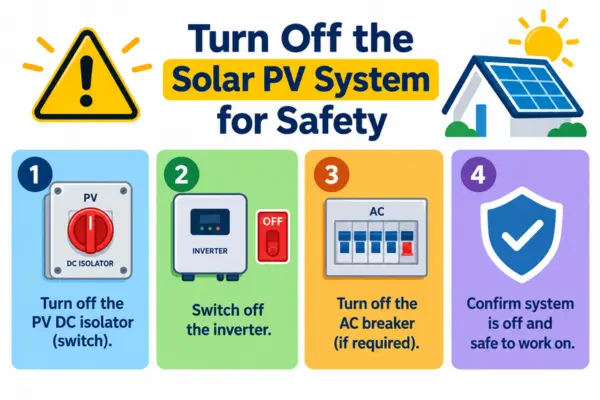
Go to your main electrical panel or solar shut-off switch and turn the system off. This stops electricity from flowing through the wires under the panels. Never work near the array while it is still producing power.
Step 3: Safely Remove Debris and Inactive Nests
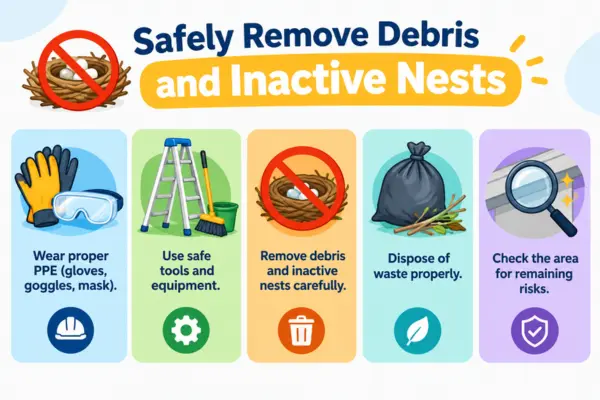
Wear gloves and a mask. Gently pull out the empty nest, twigs, leaves, and droppings. Place everything in a sealed bag and throw it away. Avoid using high-pressure water, because it can damage wires and connections.
Step 4: Disinfect the Area and Clean Wiring
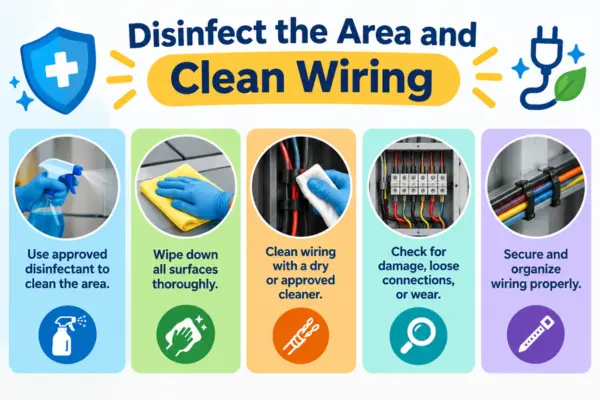
Wipe the roof surface and any visible wiring with a mild disinfectant or soapy water. Remove leftover droppings so they do not cause future corrosion or moisture problems. Let the area dry completely before moving to the next step.
Step 5: Install Critter Guard Mesh Around the Edge
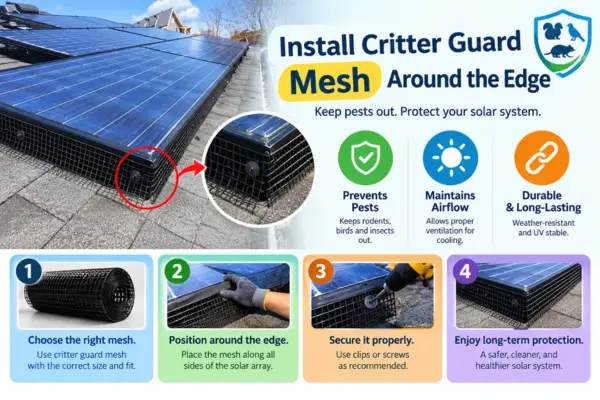
Attach PVC-coated wire mesh around the full perimeter of the solar array. Use only non-penetrating clips or J-hooks that clamp onto the panel frames. These clips keep your solar warranty safe and create a strong barrier that stops birds from nesting again.
How Much Does Solar Panel Bird Proofing Cost in the USA?
The cost of stopping birds from nesting under solar panels depends on whether you do the work yourself or hire a professional. Prices also change with the size of your solar array and how easy it is to reach the roof. Here is a clear breakdown based on current U.S. pricing.
DIY Installation Cost Breakdown ($100 – $300)
Most homeowners can buy a complete critter guard kit for $100 to $300. This usually includes PVC-coated wire mesh and the special non-penetrating clips or J-hooks needed to attach it.
- Basic kits for smaller arrays start around $100
- Larger systems or heavier-duty mesh can reach $250–$300
- Extra tools like gloves, a mask, and cutting tools may add a little more
DIY works best on single-story homes with low-pitch roofs. You save money on labor, but you must be comfortable working safely on the roof and careful not to damage the panels or void the warranty.
Professional Bird Proofing Services ($300 – $1,200)
Hiring a trained installer typically costs between $300 and $1,200 for a standard residential system. The final price depends on the size of your array, roof type, and whether nests or droppings need to be cleaned first.
- Small, easy-access systems often fall in the $300–$700 range
- Medium systems on steeper or more complex roofs usually cost $700–$1,200
- Very large arrays or jobs that need heavy cleanup can go higher
Professional service usually includes nest removal (when legal), cleaning, and proper installation with warranty-safe clips. Many homeowners choose this option for safety and long-term peace of mind.
Frequently Asked Questions
Will bird mesh void my solar panel warranty?
No. Your warranty stays valid if you use specialized solar panel clips or J-hooks. These clips clamp onto the panel frames without any drilling. Most U.S. solar manufacturers accept this method when the installation is done correctly.
Can I spray water to remove bird nests under panels?
No. High-pressure water can force moisture into the wiring and electrical connections under the array. This may cause short circuits or long-term damage. It is safer to remove nests by hand after the system is turned off.
How much power do you lose when birds nest under solar panels?
Heavy nesting and droppings can reduce your system’s power output by 15% to 30%. The droppings create shade and hotspots on the panels, which lowers the amount of electricity your home receives.
How do I know if a nest is active or inactive?
Look for eggs, chicks, or adult birds returning to the nest. If the nest is empty, dry, and no birds have visited for several days, it is usually inactive. When you are not sure, wait or contact a local wildlife expert before removing anything.
Do solar panel bird guards work for pigeons, sparrows, and starlings?
Yes. A properly installed critter guard mesh blocks the most common birds that nest under solar panels in the United States, including pigeons, sparrows, and starlings.
How often should I check the bird mesh?
Inspect the mesh at least once or twice a year. Check after strong storms or at the end of nesting season to make sure there are no gaps or damage.
Is professional installation better than DIY?
DIY works well for simple, single-story roofs if you follow the non-penetrating clip method carefully. Professional installation is safer for steep roofs, large arrays, or when you want the work fully documented for warranty purposes.
Conclusion
Birds nesting under solar panels is a common problem for many U.S. homeowners, but it is one you can solve safely and permanently. The most reliable method is installing a PVC-coated critter guard mesh around the array using non-penetrating clips that protect your warranty. Always check for active nests first and follow federal wildlife rules before removing anything.
Once the mesh is in place, you protect your system’s power output, reduce fire risks, and avoid costly roof damage. Whether you choose a careful DIY approach or hire a professional, taking action now keeps your solar investment working the way it should for years to come.