You cannot increase a solar panel’s factory-rated efficiency after it has been manufactured. But you can improve its real-world performance and energy output. Right direction solar panel installation, proper maintenance, and monitoring system help reduce energy losses. Allow your solar panels to operate closer to their rated efficiency over their lifespan.
Many homeowners assume solar panels always produce their maximum output. In reality, factors such as dirt buildup, partial shading, high operating temperatures, poor roof orientation, and aging system components can reduce electricity generation. The good news is that several proven strategies can help your solar energy system produce more usable power without replacing the panels.
Throughout this guide, you will discover seven practical ways to improve solar panel performance. Learn what actually affects energy production, and understand which upgrades provide the greatest return on investment for U.S. homeowners.
What is Solar Panel Efficiency?
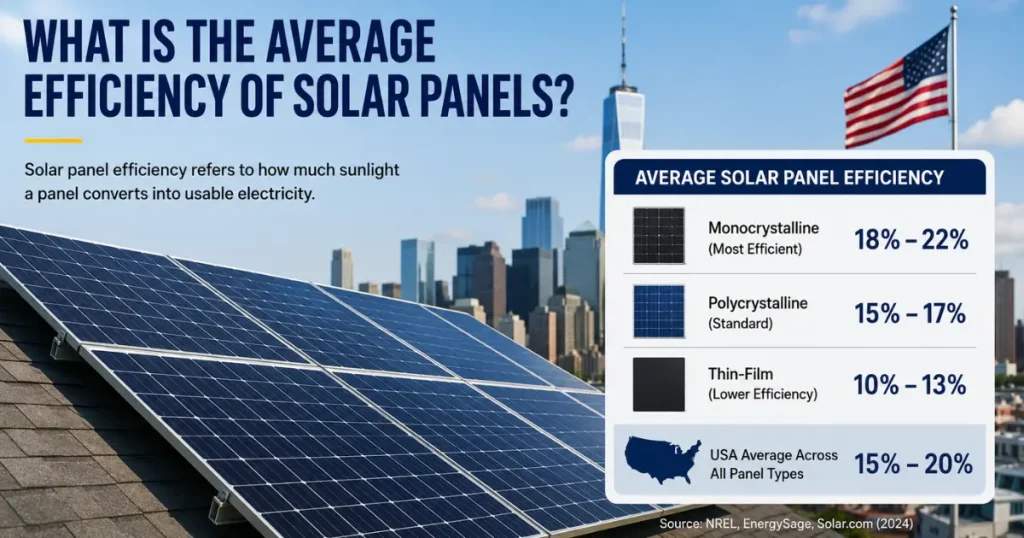
Solar panel efficiency is expressed as a percentage. Most modern residential solar panels achieving 18% to 23% efficiency. A higher efficiency rating means the panel can generate more electricity from the same amount of roof space. It’s important to remember that efficiency and performance are not the same. Efficiency is a laboratory-tested rating. Actual energy production depends on factors such as sunlight, temperature, shading, panel orientation, and system maintenance.
Can You Really Improve Solar Panel Efficiency?
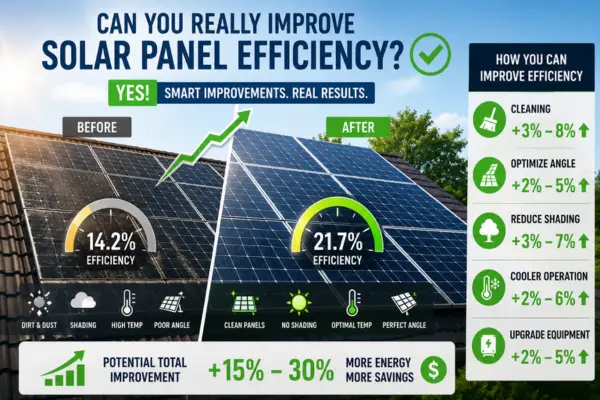
No, factory-rated efficiency cannot be increased, but you can increase real-world performance by reducing energy losses by cleaning dirt, shading, improper installation, high temperatures, and other environmental factors. Although the panel’s efficiency rating remains fixed, these improvements can help your system generate more electricity over its lifetime.
Factory Efficiency vs. Real-World Performance
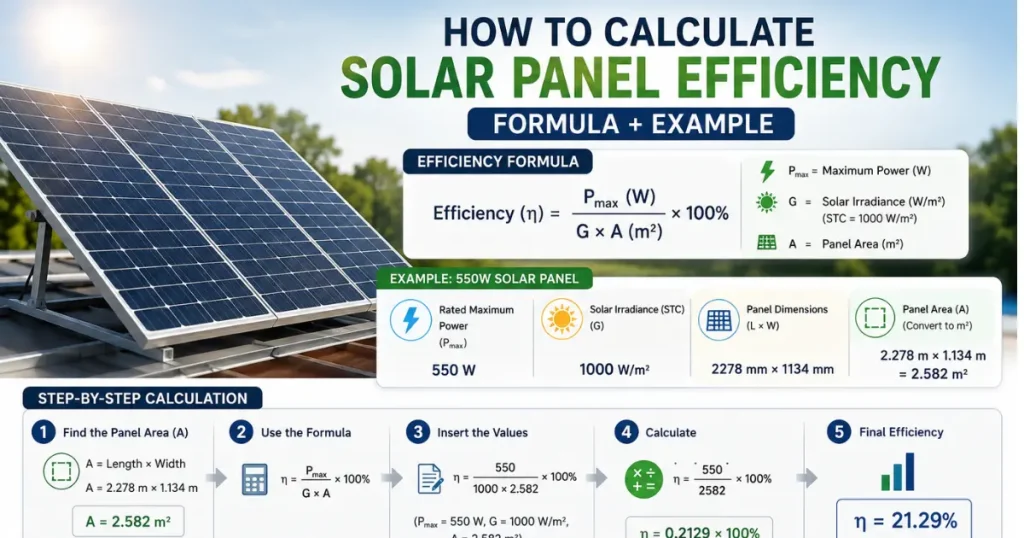
Factory-rated efficiency measures how effectively a solar panel converts sunlight into electricity under Standard Test Conditions (STC). Manufacturers test solar panels in controlled laboratory environments with a cell temperature of 25°C (77°F) and solar irradiance of 1,000 watts per square meter (W/m²). This standardized testing allows homeowners to compare different solar panels fairly.
Real-world performance, however, depends on conditions that rarely match the laboratory. Factors such as roof orientation, seasonal weather, partial shading, dirt buildup, and operating temperature all influence how much electricity a solar panel actually produces each day. However, let’s see their realistic comparison.
| Factory-Rated Efficiency | Real-World Performance |
| Measured under Standard Test Conditions (STC) | Measured under actual outdoor conditions |
| Fixed after manufacturing | Varies throughout the year |
| Expressed as an efficiency percentage (%) | Measured by electricity produced (kWh) |
| Used to compare solar panels | Reflects actual system output and savings |
| Not affected by maintenance | Improved through proper maintenance and system optimization |
Example: Imagine two neighbors install identical 22%-efficient solar panels. One home has a clean, south-facing roof with no shading, while the other experiences afternoon shade from mature trees. Although both systems have the same factory-rated efficiency. The first homeowner will produce significantly more electricity because the panels operate under better real-world conditions.
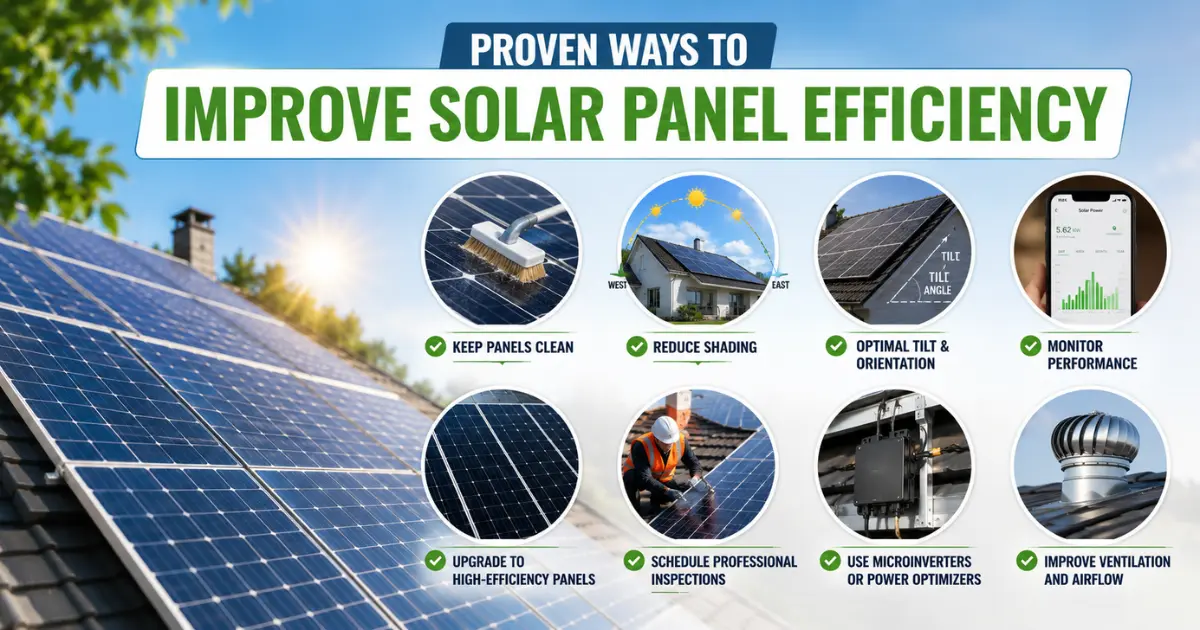
7 Proven Ways to Maximize Solar Panel Performance
The best way to improve a solar panel’s real-world performance is to minimize energy losses. Simply, panel maintenance, proper system design, and timely upgrades can significantly increase annual electricity production while extending the life of your solar energy system.
The six methods below are practical, homeowner-friendly, and widely recommended to help your solar panels operate closer to their rated performance under real-world conditions.
1. Keep Solar Panels Clean
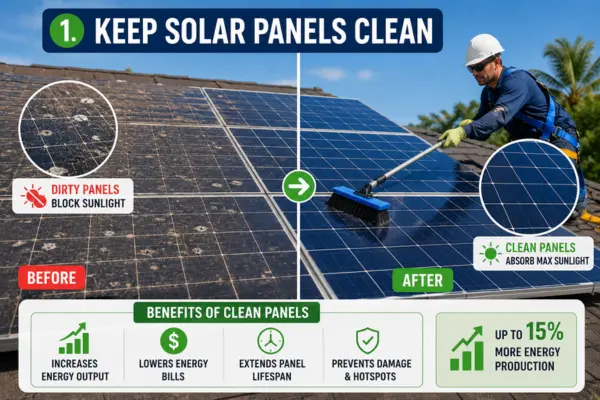
Clean solar panels absorb more sunlight and produce electricity more efficiently than panels covered with dirt and debris. Dust, pollen, bird droppings, leaves, and snow can block sunlight from reaching the photovoltaic cells, reducing energy production over time.
While rainfall naturally removes light dust in many parts of the United States. Homes located near construction sites, farms, or dusty environments may require solar panel occasional cleaning.
Best practices:
- Remove leaves and debris before they accumulate.
- Wash panels with clean water and a soft brush or sponge.
- Avoid abrasive cleaners or pressure washers that could damage the glass surface.
- Clean panels early in the morning or late in the evening when they are cool.
2. Reduce Shading Throughout the Day
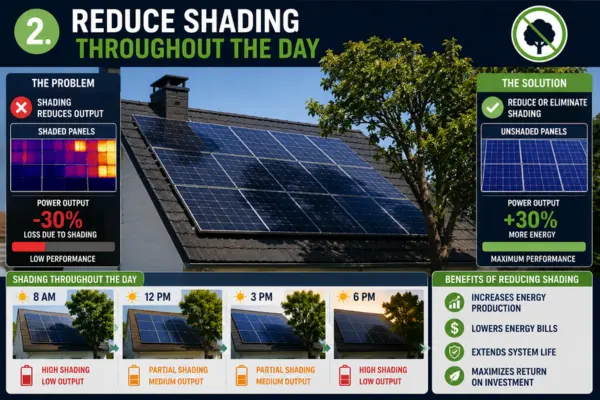
Even partial shading can significantly reduce solar panel output. Trees, chimneys, nearby buildings, antennas, and other roof obstructions may block sunlight during different times of the day, decreasing overall system performance. Small changes in shading can have a noticeable impact, particularly in systems that use traditional string inverters.
You can improve performance by:
- Trimming nearby trees that cast seasonal shadows.
- Removing unnecessary roof obstructions when possible.
- Planning future landscaping with solar exposure in mind.
- Using microinverters or power optimizers if partial shading cannot be avoided.
3. Install Panels at the Optimal Tilt and Orientation
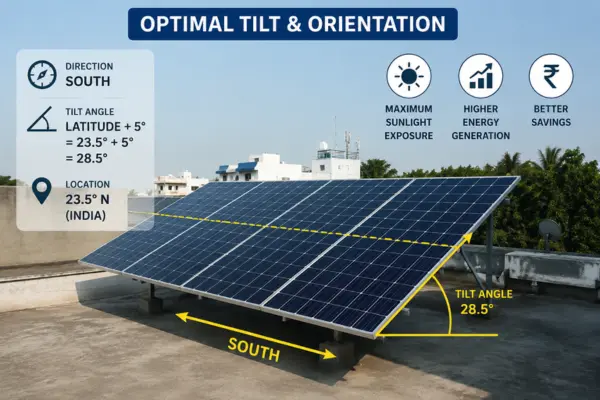
Proper panel positioning is essential for maximizing annual solar energy production. The direction of your panels installation angle determine how much sunlight they receive throughout the year.
For most homes in the United States:
- South-facing roofs generally produce the highest annual output.
- Southeast- and southwest-facing roofs also perform well.
- The ideal tilt angle usually depends on your geographic latitude.
- Professional installers use solar modeling software to determine the best configuration for each property.
4. Monitor System Performance Regularly
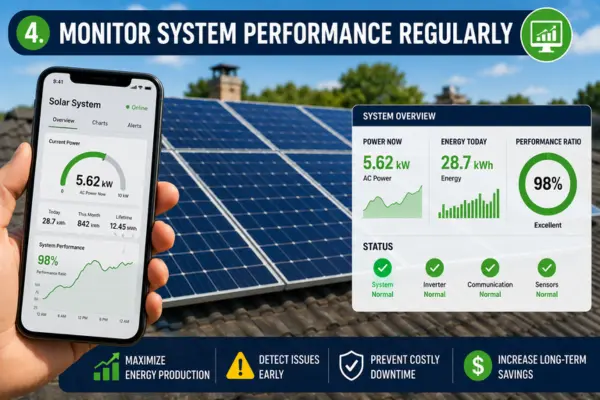
Monitoring your solar energy system helps identify performance issues before they become costly problems. Most modern inverters and monitoring platforms provide real-time data on energy production. It allows homeowners to detect unexpected drops in output.
Regular monitoring can help identify:
- Dirty solar panels
- New shading from growing trees
- Faulty panels
- Inverter problems
- Loose electrical connections
- Unexpected production declines
Checking your system every few weeks makes it easier to catch small issues before they significantly affect annual electricity generation.
5. Upgrade to High-Efficiency Panels When Replacing Older Modules
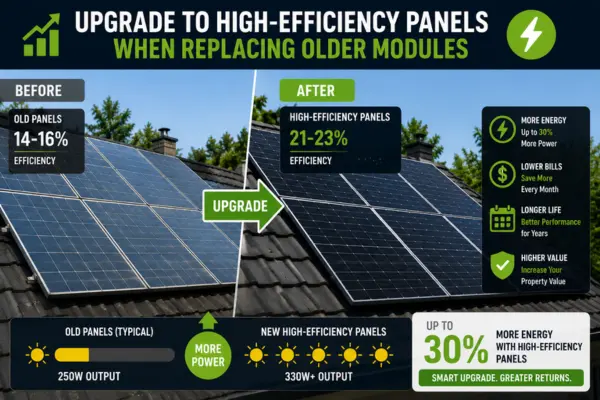
Replacing aging solar panels with newer, high-efficiency models can increase electricity production without expanding your roof space. While panel replacement isn’t necessary for every homeowner, it may be a worthwhile investment if your existing system is nearing the end of its service life or no longer meets your energy needs.
An upgrade may be worth considering if:
- Your panels are more than 20–25 years old.
- Your household electricity usage has increased.
- You’re replacing a damaged roof.
- You want to add battery storage.
- New panels offer significantly higher efficiency than your existing system.
6. Professional Inspections and Preventive Maintenance
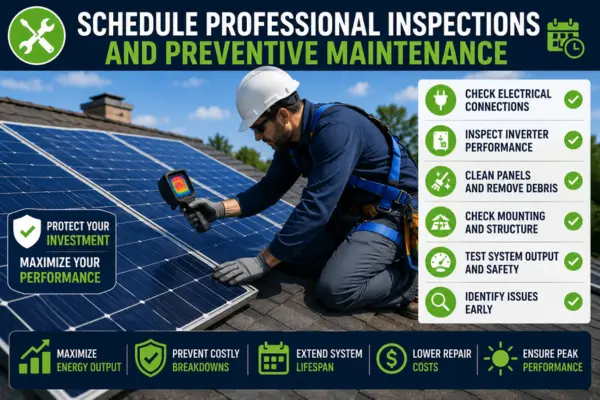
Routine inspections help ensure your solar energy system continues operating safely and efficiently. While solar panels require relatively little maintenance, certified installers or licensed electricians can identify issues that are difficult to detect during a visual inspection.
A professional inspection typically includes:
- Checking electrical wiring and connectors
- Inspecting mounting hardware
- Testing inverter performance
- Looking for cracked or damaged solar panels
- Verifying system grounding and electrical safety
- Identifying corrosion, loose connections, or water intrusion
Preventive maintenance helps protect your investment, reduce unexpected repairs, and keep your solar system producing reliable electricity for decades.
7. Upgrade to Microinverters or Power Optimizers
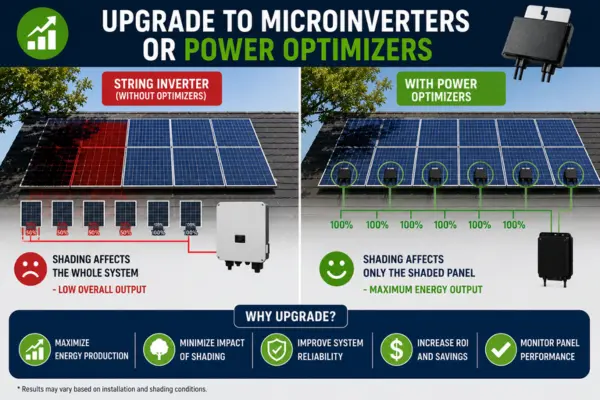
Upgrading to microinverters or power optimizers can improve a solar system’s real-world performance. If your roof experiences partial shading or varying sunlight conditions. Unlike traditional string inverters, these module-level power electronics allow each solar panel to operate more independently, reducing energy losses caused by underperforming panels.
Upgrading may be worthwhile if you:
- Have partial shading during certain times of the day.
- Own a roof with multiple angles or complex roof sections.
- Plan to expand your solar system in the future.
- Want panel-level performance monitoring.
- Frequently experience production differences between panels.
Factors That Affect Solar Panel Performance
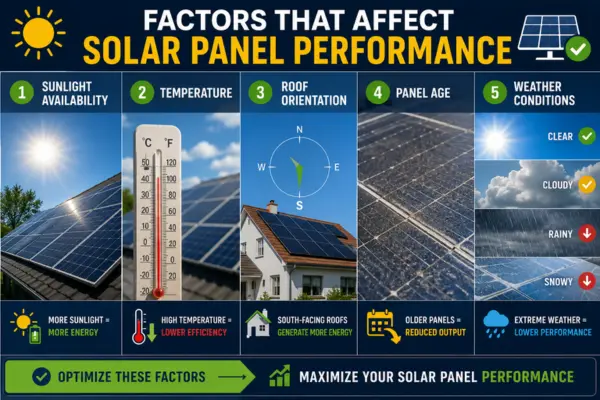
Several environmental and installation factors determine how much electricity your solar panels generate each day. While a panel’s factory-rated efficiency remains fixed, real-world performance varies depending on sunlight, temperature, roof placement, panel age, and local weather conditions. Understanding these factors helps homeowners optimize energy production and identify opportunities to improve long-term system performance.
1. Sunlight Availability
The amount of direct sunlight your solar panels receive is the single most important factor affecting energy production. Solar panels generate the highest output when exposed to unobstructed sunlight throughout the day. Homes located in regions with more annual sunshine generally produce more electricity than those in cloudier climates.
Seasonal changes also influence performance. Longer summer days increase energy production, while shorter winter days naturally reduce daily output.
Example: A solar panel installed in Arizona, Phoenix will generally produce more annual electricity than the same panel installed in Seattle, Washington, because it receives more peak sunlight hours throughout the year.
2. Temperature
Solar panels perform best in bright sunlight, but excessive heat can reduce their electrical output. Although sunlight is essential for generating electricity, high operating temperatures increase electrical resistance inside photovoltaic cells, causing a slight decline in performance.
Most solar panels are tested under STC at 25°C (77°F). As panel temperatures rise above this level, power output gradually decreases according to the panel’s temperature coefficient.
3. Roof Orientation
The direction your roof faces directly affects how much sunlight your solar panels receive over the course of a year. In the Northern Hemisphere, south-facing roofs typically produce the highest annual energy output because they receive the most consistent sunlight.
Homes with southeast- or southwest-facing roofs can also achieve excellent solar production, especially when panels are installed at the proper tilt angle. Professional installers use site assessments and solar design software to determine the best orientation for each property.
4. Panel Age
Solar panels gradually lose a small amount of performance as they age, but the process is slow and predictable. Most high-quality residential solar panels degrade by approximately 0.3% to 0.5% per year, allowing them to continue producing around 85% to 92% of their original output after 25 years, depending on the manufacturer and product warranty.
Natural aging is expected and is already considered in the long-term performance warranties offered by most reputable solar panel manufacturers.
5. Weather Conditions
Daily weather conditions influence solar panel performance, but they rarely stop electricity generation altogether. Clear, sunny skies provide ideal conditions, while clouds, rain, snow, and fog temporarily reduce the amount of sunlight reaching the photovoltaic cells.
What Doesn’t Improve Solar Panel Efficiency?
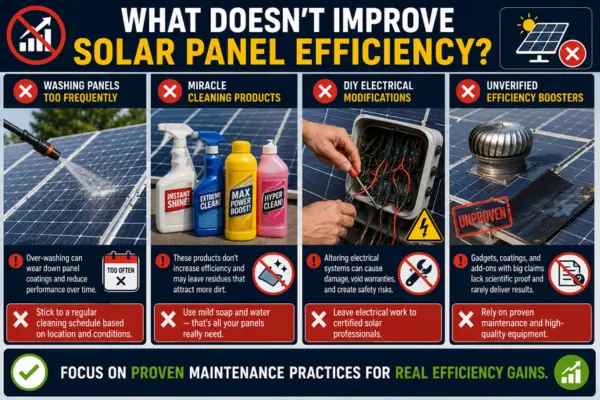
Not every tip you find online will improve your solar panel’s performance. While regular maintenance and proper system design can help maximize electricity production, some commonly recommended practices provide little to no benefit and in some cases, they may even damage your solar energy system or void the manufacturer’s warranty.
1. Washing Panels Too Frequently
Cleaning solar panels too often does not significantly increase energy production. In most parts of the United States, rainfall naturally removes light dust and pollen, making frequent cleaning unnecessary. Instead of following a fixed cleaning schedule, inspect your panels periodically and clean them only when visible buildup begins to block sunlight.
Practical Tip: Homes located in dusty regions, near farms, or close to construction sites may require more frequent cleaning than homes in areas with regular rainfall.
2. Miracle Cleaning Products
No cleaning solution can increase a solar panel’s factory-rated efficiency. Products marketed as “solar panel efficiency boosters” or “performance enhancing coatings” often make exaggerated claims without independent scientific evidence.
Most solar panel manufacturers recommend cleaning with plain water or a mild, non-abrasive soap when necessary. Using harsh chemicals, abrasive pads, or unauthorized coatings may damage the protective glass or anti-reflective coating and could affect your product warranty.
Best Practice: Always follow the cleaning instructions provided by your solar panel manufacturer before using any cleaning products.
3. DIY Electrical Modifications
Modifying your solar panel system yourself will not increase efficiency and can create serious safety risks. Altering wiring, bypassing electrical components, or making unauthorized inverter changes may reduce system reliability, violate local electrical codes, and void equipment warranties.
Safety Note: Solar energy systems contain high-voltage electrical components that should only be serviced by trained professionals.
4. Unverified Efficiency Boosters
Be cautious of products or online claims promising dramatic increases in solar panel efficiency. Accessories that advertise unrealistic performance improvements without credible testing or manufacturer support rarely deliver measurable results.
Examples include:
- Magnetic or electronic efficiency booster devices
- Unverified reflective films or aftermarket coatings
- Homemade panel modifications
- Products claiming to increase efficiency by unrealistic percentages
How Much More Electricity Can You Generate?
The amount of additional electricity your solar panels can generate depends on the improvements you make and the condition of your existing system. The actual improvement varies from one installation to another. A well-maintained system with minimal shading may see only a small increase. An older system affected by dirt, heavy shading, or equipment issues could experience a much larger improvement after corrective measures are taken.
| Optimization Method | Performance Improvement | Difficulty |
| Clean heavily soiled panels | 2%–5% | Easy |
| Remove or reduce shading | 5%–20% | Moderate |
| Install microinverters or power optimizers (where appropriate) | Up to 5%–25% | Moderate |
| Monitor system performance | Varies | Easy |
| Professional inspection and maintenance | Varies | Moderate |
Conclusion
Improving solar panel efficiency isn’t about changing the panel itself it’s about maximizing its real-world performance. Proper system design, and timely upgrades. Following these proven strategies helps reduce energy losses, increase electricity production, and ensure your solar energy system delivers reliable performance and long-term savings for years to come.
Can Solar Panel Efficiency Be Increased After Installation?
No. A solar panel’s factory-rated efficiency cannot be increased after installation. However, you can improve your system’s real-world performance by keeping panels clean, reducing shading, monitoring energy production, and maintaining the system properly. These steps help your panels operate closer to their rated efficiency without changing their original design.
Does Cleaning Solar Panels Improve Efficiency?
Yes, but only when dirt and debris are blocking sunlight. Dust, pollen, bird droppings, leaves, and other buildup can reduce electricity production over time. Cleaning heavily soiled panels helps restore normal performance.
Does Rain Clean Solar Panels?
Rain helps remove light dust and pollen, but it doesn’t completely clean solar panels. Sticky contaminants such as bird droppings, tree sap, and heavy dirt usually remain on the glass surface. Periodic visual inspections are the best way to determine whether additional cleaning is necessary.
How Often Should Solar Panels Be Cleaned?
Most residential solar panels only need cleaning once or twice a year under normal conditions. Homes located in dusty areas, near construction sites, under heavy tree cover, or in regions with limited rainfall may require more frequent cleaning. Inspect your panels regularly and clean them only when visible debris begins to affect performance.
Does Shading Reduce Solar Panel Output?
Yes, even partial shading can significantly reduce a solar panel system’s energy production. Trees, chimneys, neighboring buildings, and roof obstructions may block sunlight during parts of the day. Trimming vegetation, improving panel placement, or using microinverters or power optimizers can help minimize shading losses.
Can Microinverters Improve Solar Panel Performance?
Yes, especially on roofs affected by partial shading or multiple roof angles. Microinverters allow each solar panel to operate independently, reducing energy losses caused by a single underperforming panel. While they do not increase factory-rated efficiency.
Do Solar Panels Become Less Efficient Over Time?
Yes, but the decline is gradual and expected. Most modern solar panels lose approximately 0.3% to 0.5% of their performance each year, allowing many high-quality systems to retain around 85% to 92% of their original output after 25 years, depending on the manufacturer and warranty.
Is Professional Maintenance Worth the Cost?
Yes, if the system is older or producing less electricity than expected. Professional inspections can identify loose wiring, damaged panels, inverter issues, or hidden electrical faults before they become costly repairs. Routine maintenance also helps ensure the system continues operating safely and efficiently over the long term.