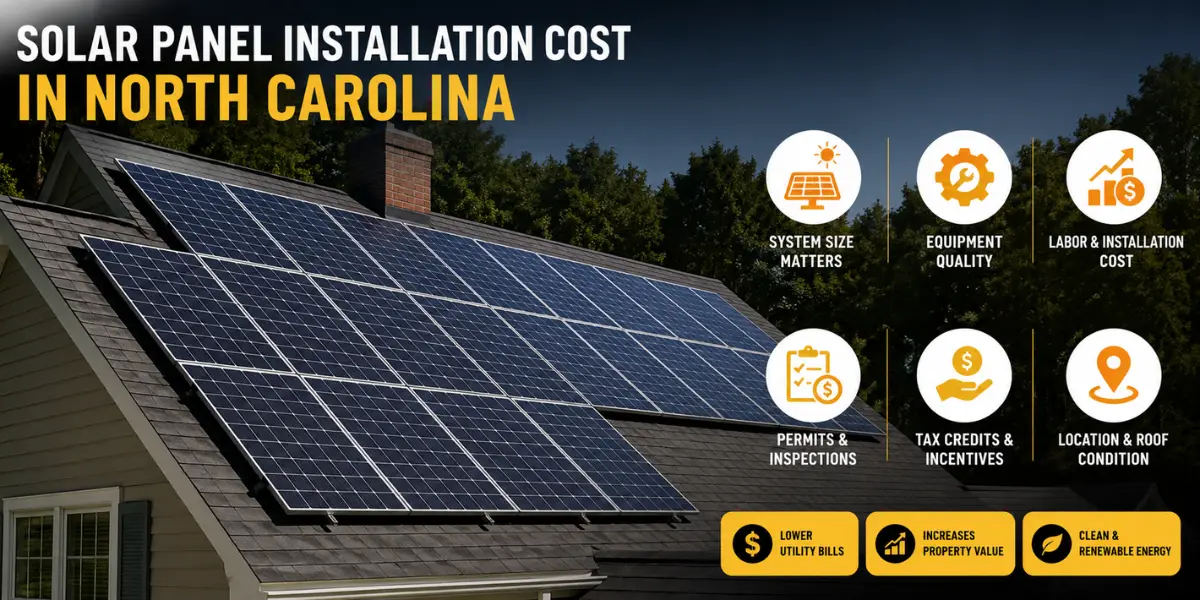
North Carolina homeowners comparing solar need more than a single average price. The solar panel cost in North Carolina can vary based on system size, equipment, installation requirements, roof conditions, utility requirements, and financing. Solar panel installation cost in North Carolina varies based on system size, equipment, installation requirements, roof conditions, utility requirements, and financing.
This guide explains the costs that matter most, including typical pricing by system size, what a solar quote may include, and expenses that can increase the final price. It also covers how incentives and financing can affect your overall cost, helping you compare solar proposals and understand what you may actually pay.
Key Takeaways:
- Average installed cost: $2.34/W
- Average system size: 14.05 kW
- Reported range: $28,002–$37,884
- Average cost: $32,943 before incentives
How Much Does Solar Panel Installation Cost in North Carolina?
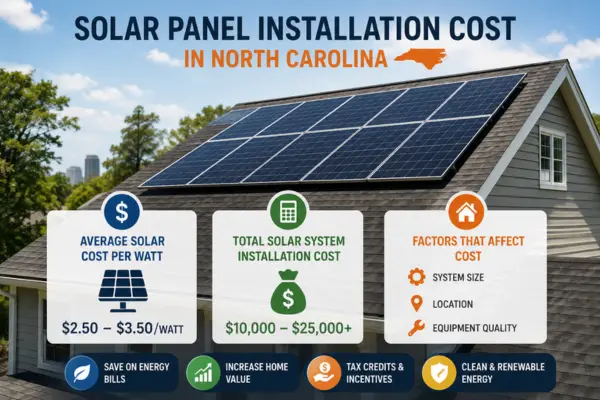
As of July 2026, the average cost of a residential solar installation in North Carolina is $2.34 per watt, including installation system. EnergySage reports an average system size of 14.05 kW, with an average installed cost of $32,943 before available incentives. Reported prices for a system of that size range from about $28,002 to $37,884, showing why an individual homeowner’s quote may differ from the statewide average.
1. Average Solar Cost per Watt in North Carolina
The current North Carolina average is $2.34/W installed. Cost per watt is useful when comparing quotes because it provides a common basis for systems of different sizes.
Using that statewide benchmark, a 10 kW system would be about $23,400 before incentives. This is a simple calculation based on the average $/W figure, not a guaranteed market price for a 10 KW installation. EnergySage’s current estimate for a 10 KW system is $23,444, which is consistent with that benchmark.
2. Total Solar System Installation Cost
For the average 14.05 kW residential system, EnergySage reports an installed cost of approximately $32,943 before available incentives. Its current reported range is $28,002 to $37,884 for that system size.
The final price for your home can differ because solar quotes are based on the specific system, equipment, property, and project requirements. A statewide average is therefore best used as a benchmark for comparing quotes, rather than as a guaranteed price.
North Carolina Solar Cost by System Size
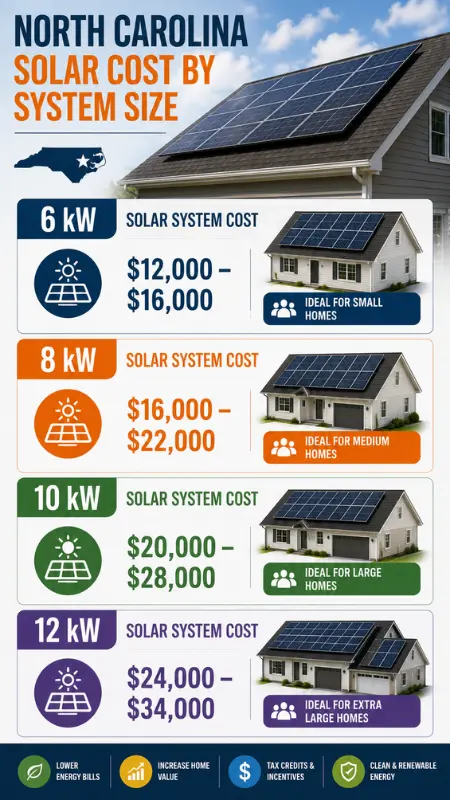
This solar panel cost by system size comparison provides a practical starting point for North Carolina homeowners. The current average installed cost of $2.34 per watt, homeowners can estimate the approximate pre-incentive cost of different residential solar system sizes. The figures below provide a practical comparison, while actual installation prices can vary based on the specific project and equipment selected.
| System Size | Estimated Cost Before Incentives |
| 6 kW | $14,040 |
| 8 kW | $18,720 |
| 10 kW | $23,400 |
| 12 kW | $28,080 |
6 kW Solar System Cost
A 6 kW solar system would cost approximately $14,040 before incentives using the current North Carolina average of $2.34/W. The actual price may differ depending on the equipment, installation requirements, and other project-specific factors included in the final quote.
8 kW Solar System Cost
An 8 kW solar system would cost approximately $18,720 before incentives using the same statewide benchmark. This figure provides a useful starting point when comparing system sizes, but homeowners should use a property-specific quote to determine the actual cost of their installation.
10 kW Solar System Cost
A 10 kW solar system would cost approximately $23,400 before incentives based on the current $2.34/W benchmark. For homeowners researching solar installation cost in NC, the most useful starting point is the installed price per watt. While the final price will depend on the equipment and installation scope specified in the quote.
12 kW Solar System Cost
A 12 kW solar system would cost approximately $28,080 before incentives using the current statewide benchmark. Because larger systems can involve different equipment and installation requirements, homeowners should compare the complete project price rather than relying on system size alone.
Note: These estimates are calculated using the current $2.34/W North Carolina benchmark. Actual installation costs can vary by project.
What Your Solar Installation Cost Includes
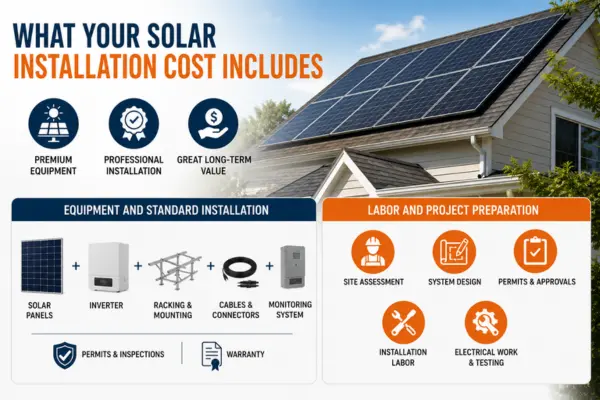
A solar installation quote usually covers more than the panels themselves. In North Carolina, the installed price generally reflects the equipment, labor, and project work needed to take the system from design through installation. As of July 2026, EnergySage reports an average installed cost of $2.34 per watt in North Carolina, although the exact scope and price can vary by installer and project.
1. Equipment and Standard Installation
The equipment portion of a residential solar project typically includes solar panels, inverters, mounting hardware, and required electrical components. A typical installation scope includes mounting the array and completing the electrical connections required by the system design.
The exact equipment package depends on the system and products selected. If battery storage or other additional equipment is included, it should be listed separately in the proposal so you can clearly see what is covered.
2. Labor and Project Preparation
Installation labor covers the work required to mount the system, complete electrical connections, and prepare the equipment for inspection and utility approval. The project may also include planning and coordination work before and after the physical installation.
Your contract should clearly identify what is included in the quoted price, particularly for site preparation, permit handling, inspections, and utility coordination. If any work is excluded or may result in an additional charge, the solar panel installer should explain it before you sign.
Note: When comparing North Carolina solar quotes, compare the complete installed scope, not just the panel price or cost per watt. Two proposals with similar prices may include different equipment or project services.
What Can Add to Your Solar Installation Cost?
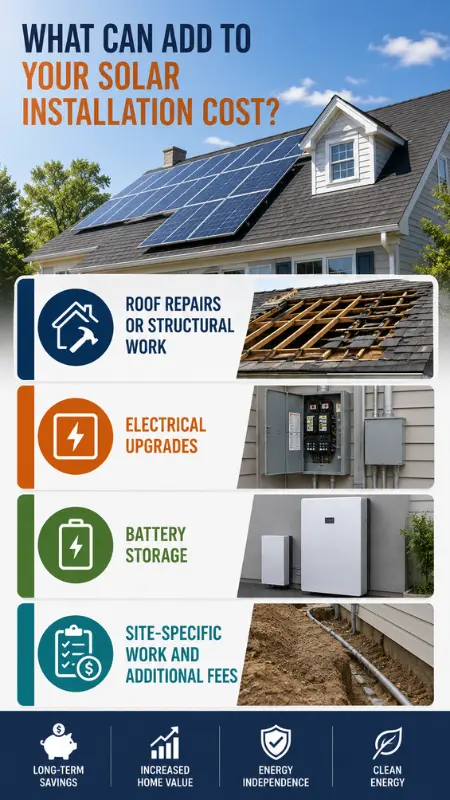
The advertised solar price does not always cover every condition at a particular home. Repairs, electrical upgrades, battery storage, or other site-specific work can increase the final project cost. These expenses vary from property to property, so they should be clearly identified in the solar proposal rather than assumed from a statewide average.
1. Roof Repairs or Structural Work
A roof that needs repairs may require work before solar panels can be installed. Structural issues can also lead to additional inspection, reinforcement, or engineering work.
If your roof is nearing the end of its useful life, it is worth discussing repairs or replacement before installing solar. Ask the installer whether any roof-related work is included in the quoted price or will be charged separately.
2. Electrical Upgrades
Some homes may require electrical work before a solar system can be connected. The need for an upgrade depends on the home’s existing electrical equipment and the size and configuration of the proposed system.
If an installer recommends electrical work, ask exactly what needs to be upgraded, why the work is necessary, and whether the quoted price includes it. Having these details in writing can help prevent unexpected charges later.
3. Battery Storage
Adding a battery can increase the total cost of a residential solar project. The final price depends on the battery’s storage capacity, equipment, installation requirements, and how it is integrated with the solar system.
If you are considering storage, ask the installer to list the battery as a separate line item. This allows you to compare the cost of a solar-only system with a solar-plus-storage system more easily.
4. Site-Specific Work and Additional Fees
Certain properties may require work beyond a standard solar installation. Depending on the home, this could include additional site preparation, specialized mounting, engineering, permitting-related work, or other project requirements.
Before signing a contract, ask the installer to identify excluded work, possible additional charges, and conditions that could change the quoted price. A detailed proposal should clearly separate the base installation from optional equipment and project-specific costs.
Bottom line: EnergySage’s July 2026 data puts the average North Carolina residential solar installation at about $2.34 per watt, including installation, with an average system size of 14.05 kW and an estimated pre-incentive cost of about $32,943. This is a useful benchmark for comparing quotes, but it is not a guaranteed price for every home. Roof condition, electrical requirements, battery storage, system size, and other property-specific factors can change the final project cost.
North Carolina Utility and Interconnection Costs
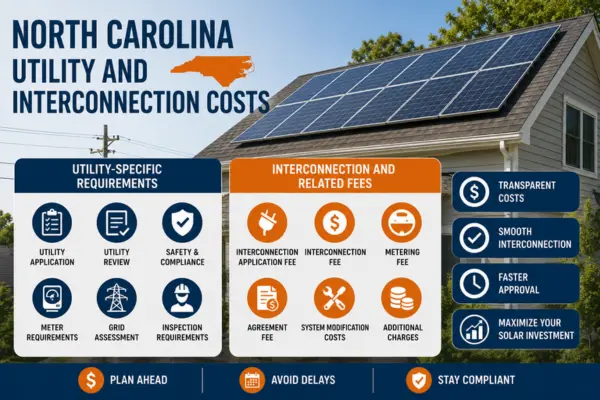
Utility and interconnection charges can add to the total cost of a solar project in North Carolina. The actual amount depends on the electric utility, system size, and whether additional utility work is required. Because these charges are project-specific, homeowners should confirm the current amount before signing a contract.
1. Utility-Specific Requirements
Each utility can have its own application process, technical requirements, and fees. For example, Duke Energy’s residential renewable-energy interconnection process may involve application and review requirements before a system can be connected to the grid.
The installer may include these charges in the solar quote or list them separately. Ask for a clear breakdown before approving the project.
2. Interconnection and Related Fees
Potential utility-related costs can include:
- Application or review fees – charged by some utilities for processing an interconnection request.
- Metering costs – may apply when the existing meter needs to be replaced or modified.
- Inspection or connection charges – may occur as part of the utility’s approval process.
- System upgrade costs – additional expenses may arise if the existing electrical infrastructure requires upgrades for the solar connection.
There is no single statewide interconnection fee that accurately represents every North Carolina residential solar project. Your installer should identify the applicable utility charges and state whether each one is included in the quoted price or paid separately.
How Incentives Affect Your Solar Cost in North Carolina
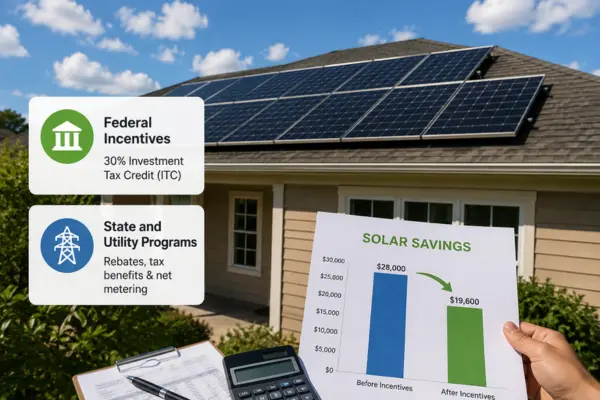
Solar incentives can reduce your overall solar cost, but available savings depend on your installation date, location, and electric utility.
1. Federal Incentives
The federal Residential Clean Energy Credit is not available for residential solar property placed in service after December 31, 2025. Therefore, homeowners installing solar in 2026 should not include a 30% federal tax credit when estimating their costs.
Homeowners with qualifying 2025 installations should follow the applicable IRS rules and keep their installation records.
2. State and Utility Programs
North Carolina does not offer a single statewide residential solar rebate that applies to every homeowner. Available savings can instead depend on the utility and its specific programs.
Eligible Duke Energy customers may qualify for PowerPair, which offers up to $3,600 for solar and $5,400 for a battery, or up to $9,000 total, subject to program requirements and available capacity.
Utility billing rules can also affect the value of excess electricity sent to the grid. Before signing a contract, ask the installer to separate the system price, incentives, utility credits, and estimated net cost.
How Financing Affects Your Total Solar Cost
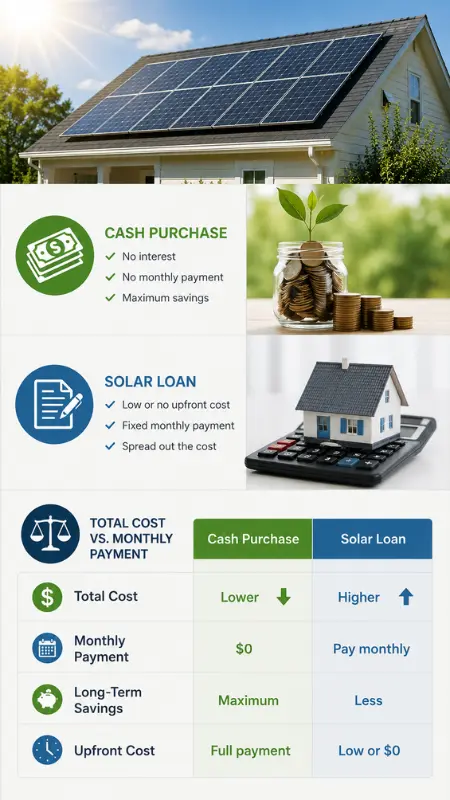
How you pay for solar affects both your upfront expense and what you pay over time. When comparing solar quotes, look at the total financing cost rather than focusing only on the monthly payment.
1. Cash Purchase
Paying for the system upfront requires more money initially, but you avoid loan interest and financing fees. You also own the system outright after installation.
Paying cash can result in a lower total project cost because you are not adding financing charges to the purchase.
2. Solar Loan
A solar loan allows you to spread the system cost over monthly payments while still owning the solar system. Your total cost depends on the interest rate, loan term, fees, and amount financed.
A lower monthly payment does not always mean a lower overall cost. A longer loan term can reduce monthly payments while increasing the amount paid over the life of the loan.
3. Total Cost vs. Monthly Payment
When comparing financing options, check the loan amount, interest rate, loan term, fees, total repayment, and upfront payment rather than looking only at the monthly payment.
EnergySage estimates the average North Carolina solar installation at about $32,943 before incentives as of July 2026. Financing a system can increase the total amount paid because of interest and other financing charges.
Before signing a solar contract, compare the cash price with the total amount you would repay through financing. This gives you a clearer picture of the actual cost of the system.
How to Compare Solar Quotes in North Carolina
Getting multiple solar quotes can help you find a better value, but the lowest price is not always the best deal. Compare the system size, equipment, included work, warranty, and financing terms before choosing an installer.
1. Compare Total Project Cost
Look at the total project price, not just the advertised price per watt or monthly payment. Make sure you know whether the quote includes equipment, installation, permits, interconnection work, and any additional site work.
Comparing quotes on the same system size and scope makes the differences in pricing easier to understand.
2. Check What’s Included
A detailed quote should clearly show what you are paying for. Check whether it includes solar panels, inverter, mounting equipment, labor, permits, monitoring, electrical work, and utility-related costs.
Also ask about exclusions. Roof repairs, electrical upgrades, battery storage, or other site-specific work may be priced separately.
3. Review Warranty and Financing Terms
Compare the warranties for the panels, inverter, equipment, and installation—not just the length of coverage. Read the terms carefully to understand what is covered and who handles a warranty claim.
If you finance the system, review the APR, loan term, fees, monthly payment, and total repayment amount. A lower monthly payment can still result in a higher overall cost.
Before signing, make sure the final contract matches the quote and clearly states the price, payment schedule, work included, and completion terms.
Frequently Asked Questions
How much does solar panel installation cost in North Carolina?
As of August 2026, the average installed solar price in North Carolina is about $2.34 per watt. EnergySage reports an average system size of 13.91 kW, costing about $32,558 before available incentives. Actual quotes vary based on system size, equipment, roof conditions, and installation requirements.
What is the average solar cost per watt in North Carolina?
The current solar cost per watt in North Carolina is approximately $2.34/W installed. This is a useful figure for comparing solar quotes, but it is not a guaranteed price for every home.
How much does a 10 kW solar system cost in North Carolina?
At the current $2.34/W benchmark, a 10 kW system works out to about $23,400 before incentives. Your actual price may be higher or lower depending on equipment, roof conditions, labor, permitting, and other project requirements.
Does the solar installation price include labor?
Yes, when a quote is given as an installed price per watt, labor is generally included. However, check the proposal to confirm whether installation labor, permits, electrical work, and interconnection costs are covered.
Can additional work increase the final solar cost?
Yes. Roof repairs, electrical upgrades, structural work, battery storage, and other site-specific requirements can increase the final cost. Ask the installer to identify excluded work and potential additional charges before signing.
Does financing increase the total cost of solar?
It can. A solar loan may lower the upfront payment, but interest and financing fees can increase the total amount paid over time. Compare the APR, loan term, fees, monthly payment, and total repayment before choosing a financing option.
Conclusion
Solar panel installation in North Carolina is a property-specific project, and the process involves more than choosing panels. Homeowners should assess the roof and electricity use, understand the installation stages, confirm local permitting and utility requirements, and compare installers before signing a contract.
The right installer should clearly explain the system design, project responsibilities, warranties, and timeline from assessment through Permission to Operate (PTO). Checking these details in advance can help reduce unexpected costs and delays while giving homeowners a clearer basis for deciding whether solar is right for their home.